.jpg)
The construction industry faces mounting pressure to deliver projects faster, more efficiently, and with better quality than ever before. Project delays cost the global construction industry billions annually, while labor shortages and resource constraints continue to challenge even the most experienced project managers. Enter takt time and takt planning – a revolutionary approach borrowed from lean manufacturing that's transforming how construction projects are scheduled and executed.
This comprehensive guide explores everything you need to know about takt time and takt planning, from basic definitions to practical implementation strategies that can dramatically improve your project outcomes. Whether you're managing residential developments, commercial buildings, or infrastructure projects, understanding these principles can help you deliver projects on schedule while optimizing resource utilization and minimizing waste.
Before we dive into implementation strategies and real-world applications, let's establish a solid foundation by understanding the core concepts and terminology.
What is Takt Time? Understanding the Foundation
Takt time represents the rhythm or beat at which a product or work unit must be completed to meet customer demand within the available production time. Originating from the German word "Takt," meaning rhythm or beat, this concept ensures that every phase of a project progresses in sync with predetermined time intervals – much like a conductor leading an orchestra where each musician plays their part harmoniously.
In construction, takt time serves as the calculated rate at which specific work units must be completed to meet project deadlines. It sets the pace for construction activities, ensuring a smooth and synchronized workflow from start to finish. By establishing this consistent rhythm, construction teams can better coordinate trades, minimize idle time, and ensure that resources are utilized efficiently throughout the project lifecycle.
The lean construction methodology emphasizes eliminating waste and optimizing value delivery, and takt time serves as a fundamental tool in achieving these objectives. This synchronization eliminates unnecessary delays and bottlenecks while optimizing the use of resources like labor, machinery, and materials.
While understanding how to calculate takt time is fundamental, the real power comes from integrating this metric into a comprehensive planning framework. This is where takt planning comes into play.
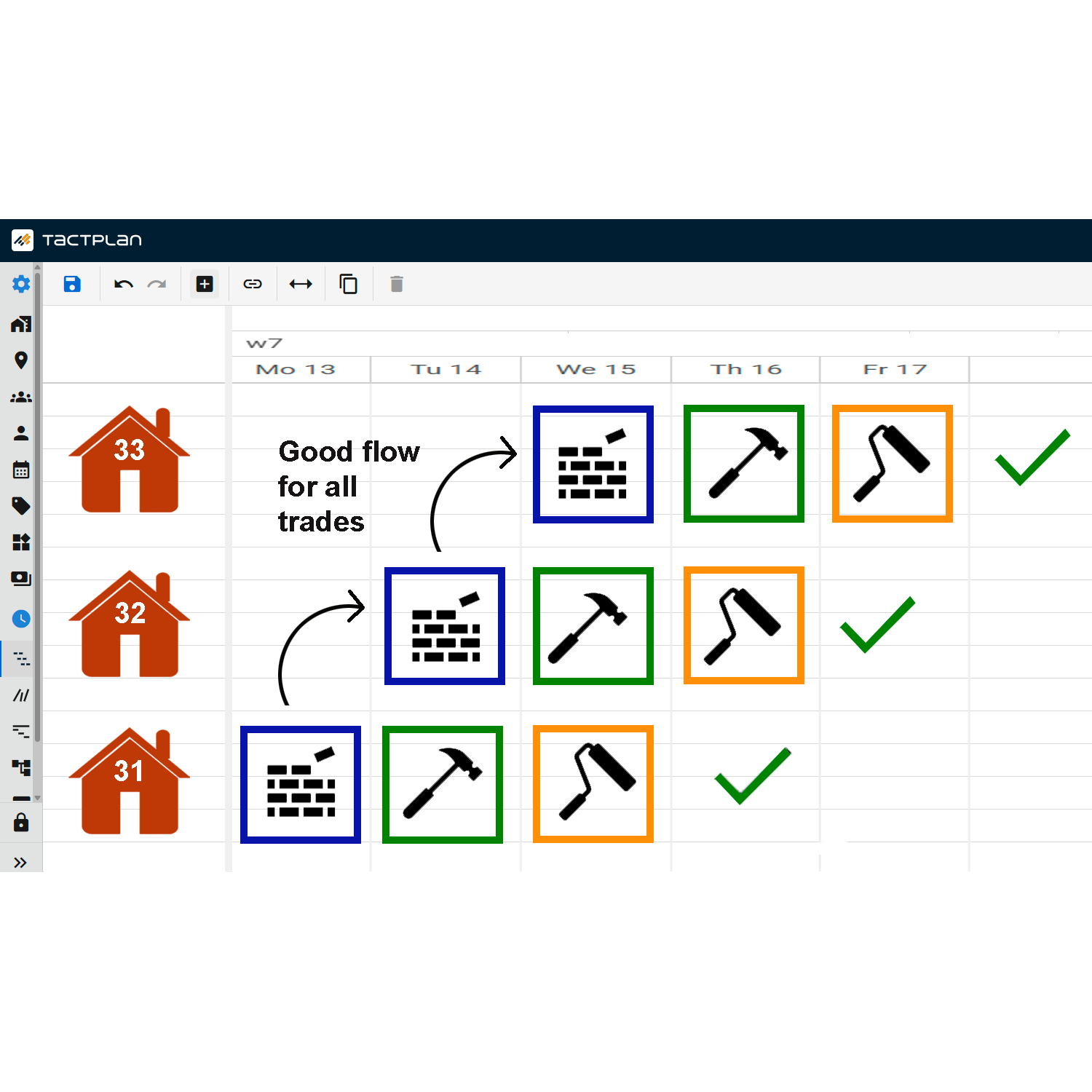
VISUAL SUGGESTION: Graphic - A Takt Planning Schedule in Construction from the blog post: https://www.tactplan.com/resources/blog/what-is-takt-planning
The Takt Time Formula: Calculating Your Project's Rhythm
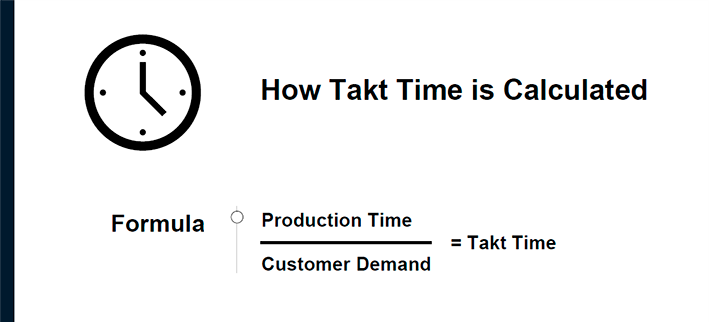
Understanding how to calculate takt time is essential for implementing this methodology effectively. The basic formula is straightforward yet powerful:
Takt Time = Net Available Production Time ÷ Customer Demand
However, in construction projects, the formula adapts to account for the unique characteristics of building work:
Takt Time = Project Duration / (Tasks + Takt Zones - 1)
Where:
- Project Duration: The total workable timeframe for the entire project, excluding non-working days and planned downtime
- Tasks: Number of tasks to be completed per zone
- Takt Zones: Defined areas within a project where tasks are executed according to takt rhythm
Understanding Available Production Time
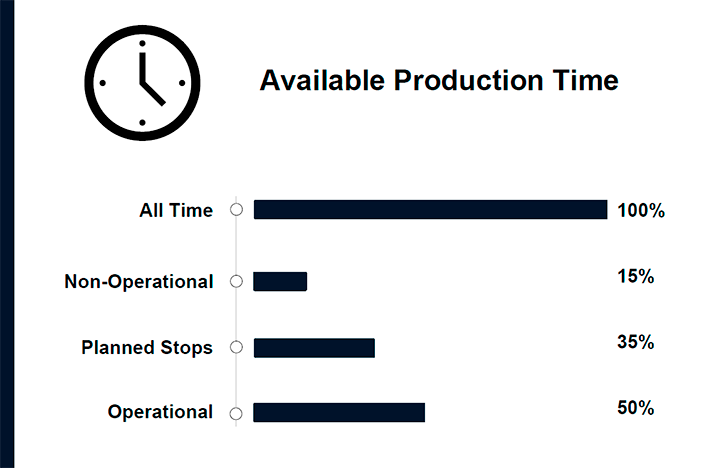
The numerator of the formula – Net Available Production Time – might seem straightforward, but it requires careful consideration. It accounts for the total time available for production, excluding both planned and unplanned downtime. Here's how to break it down accurately:
1. All Time
This refers to the total operational time, including downtime. While it might seem counterintuitive to include downtime, this ensures the formula reflects real-world production constraints.
2. Planned Stop Time
This includes scheduled downtime for tasks such as maintenance, changeovers, and machine setups. These periods are excluded from available production time since they're not dedicated to producing output.
3. Non-Operational Time
This refers to non-scheduled stops, such as breaks, shift handovers, or meetings. These activities, while essential, don't contribute to production and must be accounted for when calculating net production time
Understanding Customer Demand
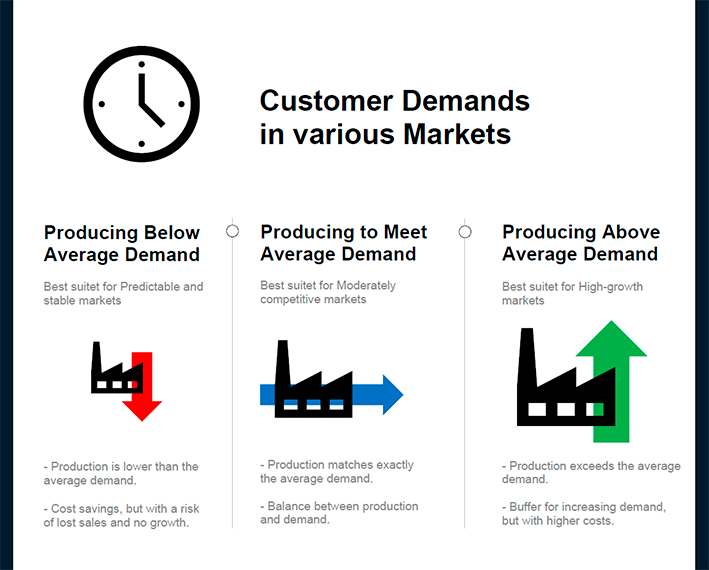
The denominator – Customer Demand – represents the number of units your customers need within a specific time frame. In construction, this translates to the number of zones or units that must be completed. However, production strategy can vary:
Producing Below Average Demand
Pros: Avoids overproduction, minimizes storage costs, reduces risk of surplus inventory
Cons: Limits revenue potential, may fail to meet sudden demand spikes
Best Conditions: Economic downturns, predictable low-fluctuation demand
Producing to Meet Average Demand
Pros: Balances production with market demand, ensures steady resource utilization
Cons: May not adapt quickly to significant demand changes
Best Conditions: Stable markets with consistent needs
Producing Above Average Demand
Pros: Provides buffer for unexpected spikes, strengthens market competitiveness
Cons: Increases inventory and storage costs
Best Conditions: High-growth markets with fluctuating needs
Practical Example
Consider a construction project with 80 apartment units to be completed in a 12-month duration. In each apartment, a list of 40 tasks must be completed:
Takt Time = 12 months × 4 (weeks/month) / (40 + 80 - 1) = 0.4 week or roughly 2 days
This 2-day takt time becomes the guiding principle for planning and scheduling all activities. It dictates the pace at which materials need to be ordered, the timeframe allocated for each trade, and the coordination required between different teams.
In construction practice, instead of calculating a theoretical optimal takt time, the takt time is typically chosen to be a week or a day for easy communication and implementation. The challenge is then to balance the plan with work group packages (also called "wagons") that follow the takt time and maintain high and stable resource utilization across zones and timeframes.
What is Takt Planning? Beyond the Numbers
Takt planning is a systematic approach to scheduling and executing tasks based on the principles of rhythm and flow. When done right, a takt plan visualizes tasks across time and locations, ensuring that resources are efficiently allocated and work flows smoothly through the project.
Core Definitions and Terms
Understanding takt planning requires familiarity with its core terminology:
Takt
The rhythm or pace at which tasks need to be completed to meet the overall project timeline. In a construction project, each trade operates in a synchronized rhythm to ensure steady progress.
Takt Plan
A visual and strategic representation of tasks, timeframes, and zones. A construction takt plan assigns specific trades to specific zones, ensuring no overlapping or delays.
Takt Phase
A segment of a takt plan focusing on a particular project stage, such as the foundation phase where all resources and tasks align to meet the takt rhythm.
Takt Control
Monitoring and adjusting tasks to ensure they adhere to the takt plan. This involves using real-time updates to identify bottlenecks and recalibrate schedules.
Takt Zone
Defined areas within a project where tasks are executed according to takt rhythm. For example, a building floor divided into sections that are completed sequentially.
Now that we've established the key terminology, let's explore why these concepts have become so critical for modern construction management and what tangible benefits they deliver.
Why Takt Time Matters in Construction
Implementing takt time in construction yields measurable benefits that directly impact project outcomes and profitability. Here's why this methodology has become essential for modern construction management:
1. Improved Efficiency and Productivity
Takt time provides a clear rhythm for construction activities, ensuring that resources are utilized efficiently. By setting a consistent pace for work, it minimizes idle time and reduces waste, leading to overall higher productivity.
For example, in high-rise construction projects, implementing takt time principles can reduce the time spent waiting for materials by up to 30%, resulting in significant cost savings and faster project completion. This improvement stems from better coordination between procurement, logistics, and on-site execution.
2. Enhanced Planning and Predictability
One of the significant advantages of takt time is its ability to improve project planning and predictability. With a defined pace for completing tasks, project managers can better forecast timelines and allocate resources accordingly. This leads to fewer surprises and delays, resulting in smoother project execution.
According to McKinsey Global Institute research, construction projects implementing integrated planning tools have achieved up to 70 percent increases in productivity on large-scale projects, while examples of innovative firms suggest that acting across seven key areas simultaneously could boost productivity by 50 to 60 percent.
Simon Grube Andersen, Project Manager at Eurodan-huse, experienced this firsthand: "After a month, Kasper and I could present my schedule to my technical director. And when I could tell him that I was pretty sure I could deliver the houses well before schedule, the spaghetti suddenly made a lot of sense." Their projects finished 1-2 months ahead of schedule using takt time planning.
3. Better Communication and Collaboration
Takt time encourages collaboration among different teams and stakeholders involved in the construction process. When everyone is working towards the same rhythm, communication becomes more transparent, and coordination between trades improves significantly.
This structured approach fosters a culture of teamwork and accountability, essential for project success. Enhanced collaboration reduces conflicts, minimizes rework, and ensures that handoffs between trades happen smoothly.
"It's a really cool method that we've implemented on several projects, and I have ambitions to implement it on all projects from now on. Everyone who uses the method sees a clear improvement in both the level of collaboration and the working environment on (the) site."
— Bjarke Aggersbøl Apollo, Digital Transformation Lead at Dansk Boligbyg
4. Minimized Rework and Higher Quality
By maintaining a steady workflow, takt time helps identify and address issues early in the construction process. This proactive approach reduces the likelihood of errors and rework, ultimately saving time and resources.
Construction companies implementing takt time principles have reported reducing rework instances by 15-20%, leading to improved project quality and customer satisfaction. When trades work in a predictable sequence with adequate time allocations, the quality of workmanship improves substantially.
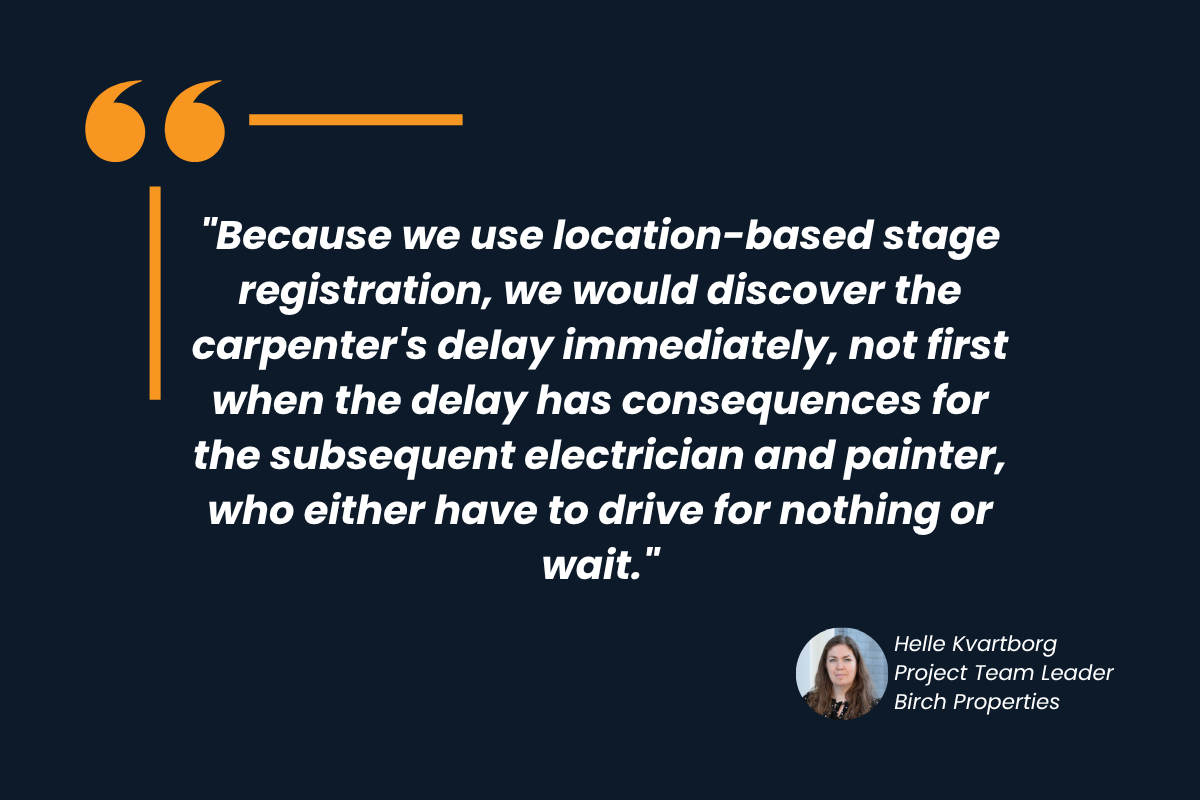
"Because we use location-based stage registration, we would discover the carpenter's delay immediately, not first when the delay has consequences for the subsequent electrician and painter, who either have to drive for nothing or wait. The key here is to discover challenges early, so we can react in time and correct course."
— Helle Kvartborg, Team Leader for Scheduling and Portfolio Management at Birch Properties
5. Continuous Improvement Culture
Takt time fosters a culture of continuous improvement within construction teams. By regularly monitoring performance against the established rhythm, teams can identify areas for optimization and implement changes to enhance efficiency further.
Regular takt time reviews and process improvements based on feedback from frontline workers can result in productivity increases of 15% or more over six months. This iterative approach to project delivery creates learning organizations that get better with each project.
6. Significant Cost Savings
Efficient resource utilization and reduced waste, facilitated by takt time, translate into significant cost savings for construction projects. By streamlining workflows and minimizing idle time, projects can achieve better cost control and stay within budget constraints.
Large-scale infrastructure projects implementing takt time principles have saved millions in material costs alone by optimizing procurement and logistics processes. Additionally, improved productivity and reduced rework contribute to higher profitability for construction companies.
7. Enhanced Safety Performance
Takt time planning promotes a structured approach to construction activities, which naturally incorporates safety measures into the workflow. By setting clear expectations and timeframes for tasks, construction teams can prioritize safety protocols and ensure compliance with regulatory requirements.
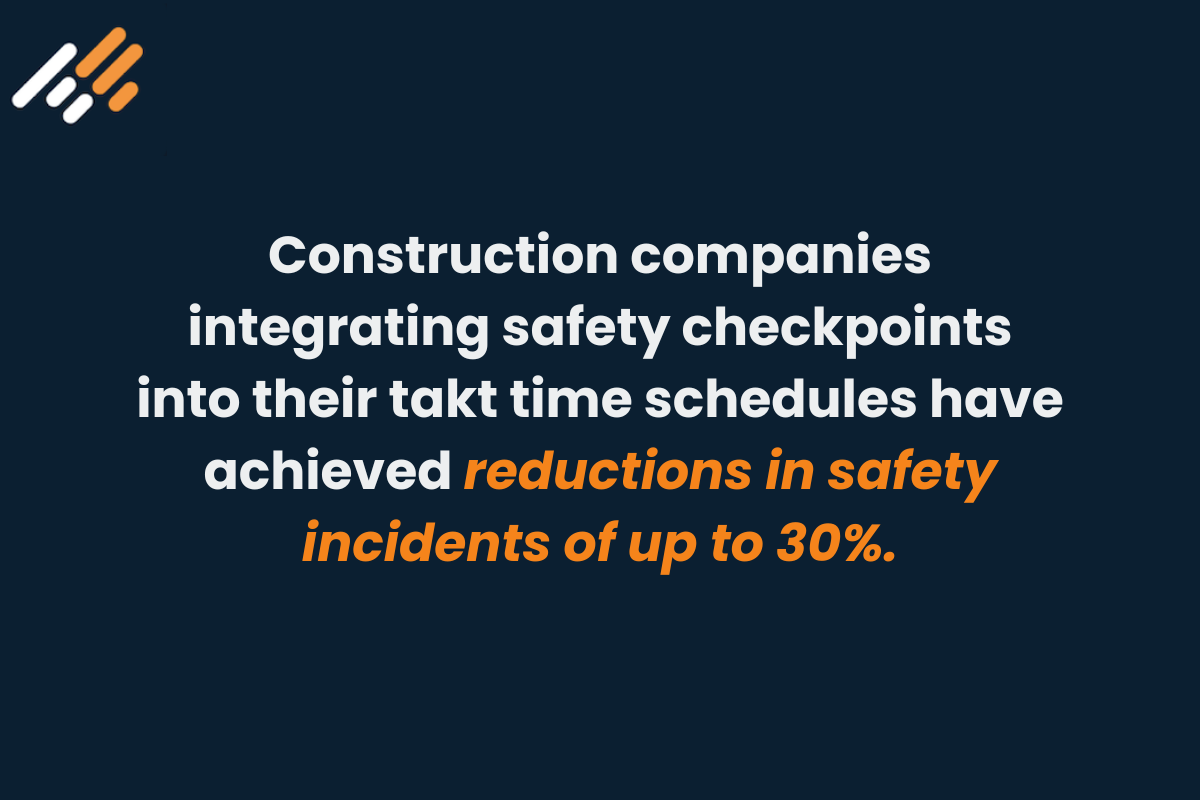
This proactive approach to safety reduces the risk of accidents and injuries on construction sites. Construction companies integrating safety checkpoints into their takt time schedules have achieved reductions in safety incidents of up to 30%.
8. Improved Stakeholder Satisfaction
By delivering projects more efficiently and predictably, takt time contributes to improved stakeholder satisfaction. Whether it's clients, investors, or regulatory bodies, stakeholders benefit from the timely completion of construction projects.
Meeting project milestones on schedule instills confidence and trust in the construction team's ability to deliver results. Transparent communication and collaboration fostered by takt time planning enhance stakeholder engagement throughout the project lifecycle.
9. Better Contractor Relationships
Takt time planning creates more predictable work for subcontractors, improving their economics and reducing conflicts. When trades know exactly when and where they'll be working, they can maintain stable crews and work more efficiently.
"I can guarantee the painter that he doesn't have to drive in vain because the previous contractor isn't finished on time. He can have 3 workers consistently on-site, and they can work undisturbed from house 1 to 31 in the two months we've agreed upon. Certainly, subcontractors are interested in as stable a flow as possible because it makes it easier for them to maintain their good pace and a good economy."
— Simon Grube Andersen at Eurodan-huse
Learn more about the 6 phases of construction project management and how takt planning fits into successful project delivery.

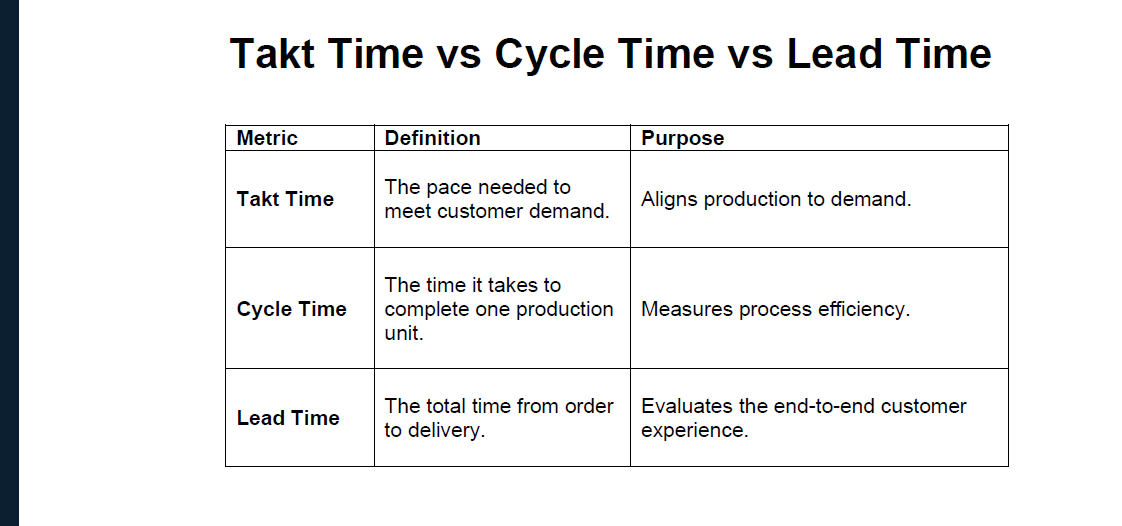
Takt Time vs. Cycle Time vs. Lead Time
Understanding the distinctions between these three critical metrics is essential for effective production planning:
Takt Time: The pace required to meet customer demand – it's externally driven by what customers need.
Cycle Time: The actual time it takes to complete one unit or task – it's internally driven by your process capabilities.
Lead Time: The total time from order placement to customer delivery – it encompasses the entire customer journey.
Brief Example
- Takt Time: A factory must produce 100 units daily to meet demand = 4.8 minutes per unit
- Cycle Time: It actually takes 4 minutes to manufacture a single unit
- Lead Time: The customer receives the product 3 days after placing the order
In construction context, if your takt time is 2 days per apartment unit, your cycle time is how long your crew actually takes to complete one unit, and your lead time is the total time from project initiation to handover.
Learn more about takt time vs. cycle time differences.
Types of Construction Projects That Benefit from Takt Time
Takt time principles can be effectively applied across various construction project types:
Residential Construction
When building multi-unit apartment complexes, takt time ensures timely completion while upholding stringent quality standards. Whether it's a suburban dwelling or a towering residential skyscraper, takt time planning ensures that each phase proceeds smoothly – from laying the foundation to adding the finishing touches.
Multi-family residential projects particularly benefit from the repetitive nature of takt planning, as similar work packages repeat across multiple units or floors.
Commercial Construction
Large-scale commercial projects, ranging from expansive office buildings to bustling shopping centers, greatly benefit from takt time planning. These complex endeavors involve coordinating numerous trades and subcontractors, each contributing specialized skills.
By implementing takt time principles, project managers can orchestrate these diverse activities with precision, ensuring construction progresses according to schedule and budget. Modern construction management software makes this coordination even more efficient.
Infrastructure Development
Takt time principles can be effectively applied to infrastructure projects, including roads, bridges, and railways. These critical infrastructure projects facilitate transportation and commerce, connecting communities and driving economic growth.
By embracing takt time methodologies, project teams can streamline project management processes, optimize resource allocation, and minimize disruptions, ensuring timely completion of infrastructure that enhances mobility and accessibility.
Understanding which project types benefit from takt time is valuable, but knowing how to actually implement these principles is where theory meets practice. Let's walk through the practical steps for successful implementation.
Implementing Takt Planning: A Step-by-Step Guide
Successfully executing takt planning requires careful preparation and adaptability. Here's a comprehensive implementation roadmap:
Step 1: Assess Project Scope and Resources
Begin by thoroughly evaluating the tasks, timelines, and resources available. Understand customer demands and project constraints. This assessment forms the foundation for all subsequent planning decisions.
Consider factors such as:
- Available workforce and their skill levels
- Equipment and material availability
- Site constraints and logistics
- Weather considerations and seasonal factors
- Contractual obligations and milestones
Step 2: Define Takt Zones
Divide the project into manageable sections or zones, each with specific tasks aligned to the takt rhythm. The definition of zones depends on your project type:
- For high-rise buildings: Individual floors or groups of floors
- For horizontal projects: Linear sections or areas
- For repetitive units: Individual apartments, rooms, or modules
Zones should be roughly equal in complexity and resource requirements to maintain consistent workflow.
Step 3: Calculate Takt Time
Determine the pace needed to complete each task based on available time and project deadlines. Use the takt time formula discussed earlier and adjust based on practical considerations.
Remember that in practice, many construction projects choose standard time intervals (1 day, 1 week) for easier communication and implementation rather than calculating to exact decimal precision.
Step 4: Develop a Detailed Takt Plan
Use visual tools to create a comprehensive takt plan, highlighting tasks, phases, and zones. Ensure all stakeholders understand their roles and responsibilities. The plan should include:
- Task sequences for each trade
- Dependencies between activities
- Resource allocations
- Buffer times between critical handoffs
- Quality checkpoints
- Safety protocols
Modern location-based scheduling software can visualize these plans effectively, making it easier for teams to understand and execute.
Step 5: Monitor Progress and Adjust
Stay flexible and continuously monitor progress. Identify bottlenecks early, and adjust plans as necessary to stay aligned with project goals. Use real-time data collection and progress tracking to make informed decisions.
Regular takt control meetings should be held to:
- Review actual vs. planned progress
- Identify emerging issues
- Coordinate upcoming work
- Adjust resource allocations
- Update stakeholders
Learn more about construction reporting techniques for effective progress tracking.
Why Location-Based Scheduling and Takt Time Work Together
Takt time and location-based scheduling (LBS) are inseparable partners in construction optimization. While takt time sets the rhythmic heartbeat by determining the pace at which work must be completed, location-based scheduling provides a spatial framework for organizing and sequencing tasks based on their physical location.
By integrating takt time principles with LBS, construction teams can synchronize their efforts more effectively, aligning the timing of tasks with their respective locations to minimize waste, reduce downtime, and maximize resource utilization.
This collaborative approach enables projects to progress smoothly and systematically, allowing teams to work in harmony towards achieving milestones while maintaining the highest standards of quality and safety. The synergy between these methodologies empowers construction professionals to orchestrate complex projects with precision and confidence.
Overcoming Common Challenges in Takt Planning
Despite its significant benefits, takt planning comes with challenges that must be addressed:
1. Resistance to New Methods
Challenge: Teams may struggle to adapt to unfamiliar processes and be tempted to revert to traditional methods that feel more comfortable.
Solution: Provide comprehensive training and ongoing support to ensure teams understand the benefits and functionality of takt planning. Highlight successful case studies to build confidence. Start with pilot projects to demonstrate value before scaling up.
"The pace of change in the construction industry is so fast at the moment. There's simply no time or surplus mental energy to get to know complex new software. FINALLY, a professional product is being developed with a solid platform and based on Nordic management methods. Tactplan is intuitive, with a simple user interface that makes implementation much easier."
— Bjarke Aggersbøl Apollo, Digital Transformation Lead at Dansk Boligbyg
2. High Dependency on Coordination
Challenge: Takt time requires precise synchronization across all stages of production. A delay in one phase can disrupt the entire process.
Solution: Build in appropriate buffers between critical activities. Establish clear communication protocols and use digital tools for real-time coordination. Regular coordination meetings help maintain alignment.
3. Demand and Schedule Volatility
Challenge: Frequent changes in project requirements or timelines necessitate constant recalculations of takt time, which can be resource-intensive.
Solution: Build flexibility into your takt plan with contingency zones and buffer times. Use rolling wave planning to adjust upcoming work while maintaining stability in near-term activities.
4. Resource Availability Issues
Challenge: Unplanned equipment downtime or workforce shortages can impede the steady pace that takt time demands.
Solution: Develop backup resource plans and maintain relationships with multiple suppliers and subcontractors. Track equipment reliability and schedule preventive maintenance during planned downtimes.
5. Detailed Planning Requirements
Challenge: Takt planning requires precise planning and coordination, which can be resource-intensive upfront.
Solution: Invest in construction management software that automates much of the detailed planning process. The upfront investment in planning pays dividends throughout project execution by reducing delays and rework.
Real-World Application: Takt Planning Success Story
Theory and formulas are essential, but nothing demonstrates the power of takt planning quite like real-world results. To illustrate the practical implementation of takt time and location-based scheduling, consider a large-scale commercial office complex project in an urban environment.
Facing tight deadlines and complex logistical challenges, the project team embraced takt time principles to establish a consistent rhythm and optimize resource utilization.
The project team implemented location-based scheduling alongside takt planning, dividing the site into distinct zones based on physical location and proximity to key resources. Each zone was assigned specific tasks and milestones, allowing for synchronized and systematic progression throughout the site.
Results achieved:
- Project completed ahead of schedule
- Substantial cost savings through improved efficiency
- Seamless coordination between subcontractors
- Proactive risk management preventing major disruptions
- Enhanced transparency and accountability across all trades
One notable aspect was the efficient coordination of subcontractors and trades. Through LBS implementation, the project team optimized resource allocation and streamlined communication between different teams. This collaborative approach fostered transparency and accountability, enabling timely decision-making and swift resolution of issues.
"If the carpenter is two days late, I can show him the consequence of his delay. It may well be that his work takes longer than expected, and it may be quite real, but the important exercise here is to show him the consequences. Then the carpenter may have to play one more game in order to reach the deadline and not postpone the end date. And when I show the carpenter the consequence of the cutting edge, he can understand it. It is easy to visualize the consequence for him with flowlines."
— Theis Ballegaard, Project Manager at Oskar Group
Furthermore, takt time and LBS allowed the team to proactively manage risks and anticipate potential challenges. By monitoring progress against established targets, deviations were identified early, allowing for timely adjustments and corrective actions that kept the project on track.
Best Practices for Successful Takt Time Implementation
1. Foster a Culture of Collaboration
Encourage open communication and collaboration among project teams, subcontractors, and stakeholders. Ensure everyone understands their role in achieving takt time objectives and works together towards common goals.
Regular coordination meetings that bring all trades together help maintain alignment and identify potential conflicts before they impact the schedule.
2. Invest in Training and Education
Provide comprehensive training on lean construction principles and takt time methodologies to project teams. Empower them with the knowledge and skills needed to implement takt time effectively and drive continuous improvement.
Training should cover not just the concepts, but practical tools and techniques for day-to-day execution.
3. Embrace Technology
Leverage construction management software, scheduling tools, and digital platforms like Tactplan to streamline communication, automate workflows, and track project progress in real-time.
Modern construction technology enhances visibility, reduces manual errors, and facilitates data-driven decision-making. Mobile apps for progress tracking ensure that field teams can easily update status and identify issues as they occur.
4. Start with Pilot Projects
Before rolling out takt planning across your entire organization, start with a pilot project. This allows your team to learn the methodology, identify challenges specific to your operations, and refine your approach before scaling up.
5. Use Visual Management
Create visual representations of your takt plan that are easily understood by all project participants. Visual schedules posted on-site help crews understand the overall flow and their specific responsibilities within the larger rhythm.
6. Build in Appropriate Buffers
While takt planning aims for efficiency, building appropriate buffers between critical handoffs prevents cascading delays when issues inevitably arise. Strategic buffering balances predictability with resilience.
Measuring Success: Key Performance Indicators for Projects using Takt Time
To ensure your takt planning implementation delivers expected benefits, track these key metrics:
- Schedule Performance Index (SPI): Actual progress vs. planned progress
- Takt Time Adherence: Percentage of zones completed within takt time
- Resource Utilization: Percentage of productive time vs. idle time
- Rework Percentage: Amount of work requiring correction
- Safety Incidents: Frequency and severity of safety events
- Cost Performance: Actual costs vs. budgeted costs
- Quality Metrics: Defect rates and punch list items
- Stakeholder Satisfaction: Client and team member feedback
Regular review of these metrics helps identify opportunities for continuous improvement and demonstrates the value of takt planning to stakeholders.
With these metrics in place to track your progress, you're equipped to not only implement takt planning but also demonstrate its value to stakeholders and drive continuous improvement.
Conclusion: Embracing the Rhythm of Efficiency
Takt time and takt planning represent more than just scheduling methodologies – they embody a philosophy that transforms construction projects from chaotic undertakings into well-orchestrated symphonies of efficiency and excellence.
By establishing a consistent rhythm for work, these principles enable construction teams to:
- Deliver projects on time and within budget
- Optimize resource utilization and minimize waste
- Enhance collaboration and communication
- Improve quality and reduce rework
- Foster continuous improvement
- Increase stakeholder satisfaction
Whether you're managing residential developments, commercial buildings, or infrastructure projects, implementing takt time principles can dramatically improve your project outcomes. The methodology adapts to projects of varying sizes and complexities, providing a scalable framework for success.
As the construction industry continues to face pressure for greater efficiency and productivity, takt time and takt planning offer proven strategies for meeting these challenges. The upfront investment in detailed planning and team training pays dividends throughout project execution and beyond.
Key Takeaways:
- Takt time synchronizes production with demand, minimizing waste and enhancing efficiency
- The formula adapts from manufacturing to construction contexts
- Takt planning provides a systematic approach to scheduling based on rhythm and flow
- Benefits include improved efficiency, predictability, collaboration, quality, and cost savings
- Implementation requires careful planning, training, and use of appropriate technology
- Location-based scheduling and takt planning work together to optimize workflows
- Success depends on fostering a collaborative culture and embracing continuous improvement
The next time you embark on a construction project, remember the rhythm of takt time and let it guide you towards success.
Ready to transform your construction scheduling?
Tactplan is purpose-built construction scheduling and management software designed to support location-based scheduling and takt time planning methodologies. Our platform helps construction professionals achieve better outcomes with less hassle, providing the tools you need to implement these proven principles effectively.
Schedule a free demo today to see how Tactplan can streamline your processes and help you deliver projects on time and within budget. You can also try Tactplan free to experience the power of modern construction planning firsthand.
Don't let outdated scheduling methods hold your projects back. Embrace the rhythm of efficiency and build better with takt time planning.