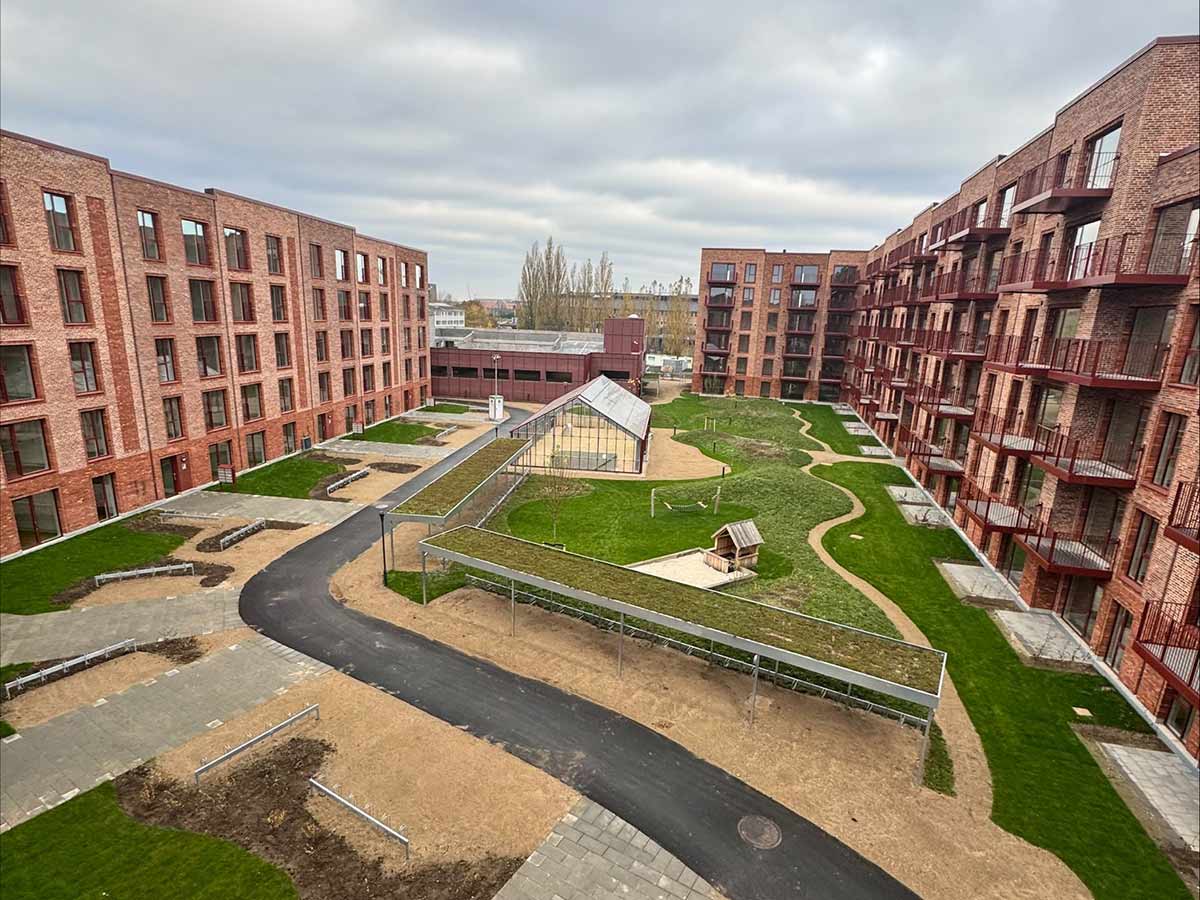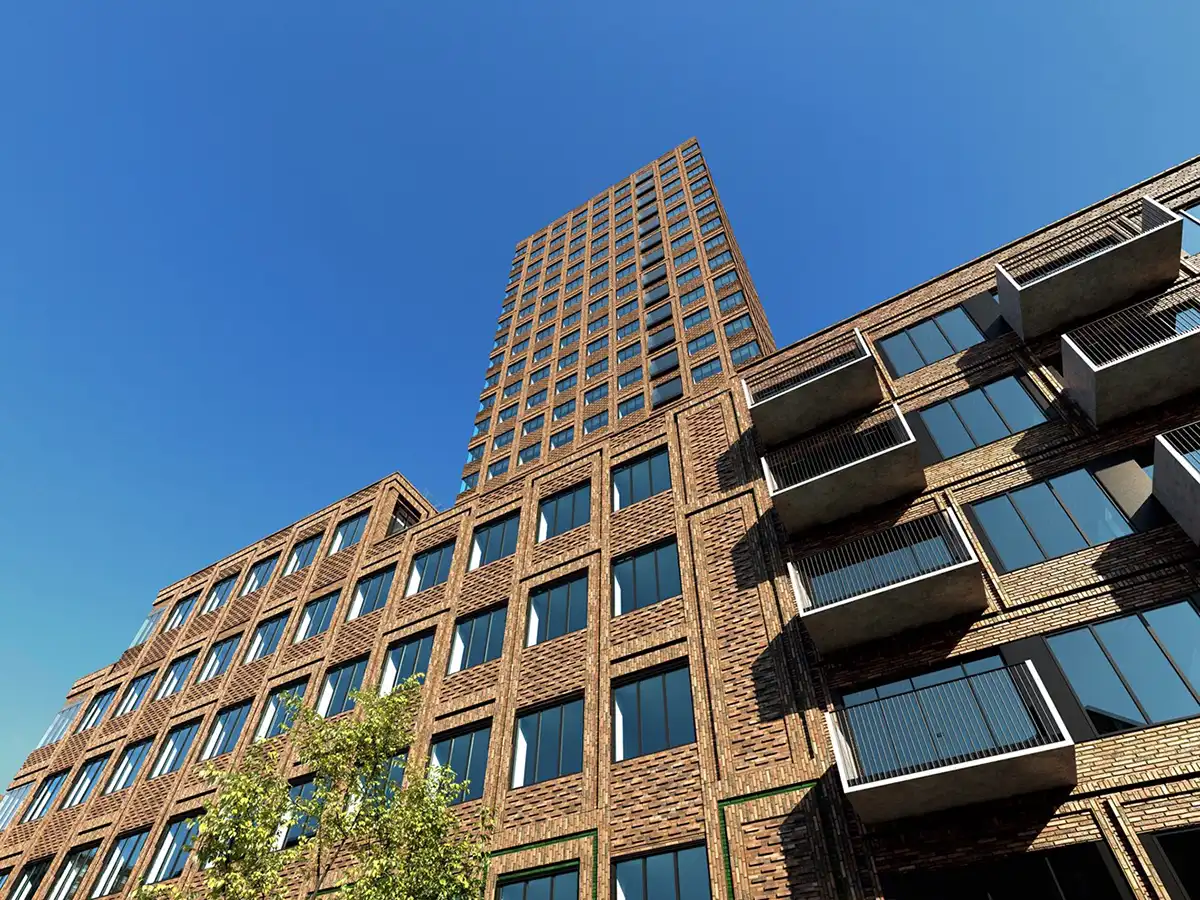
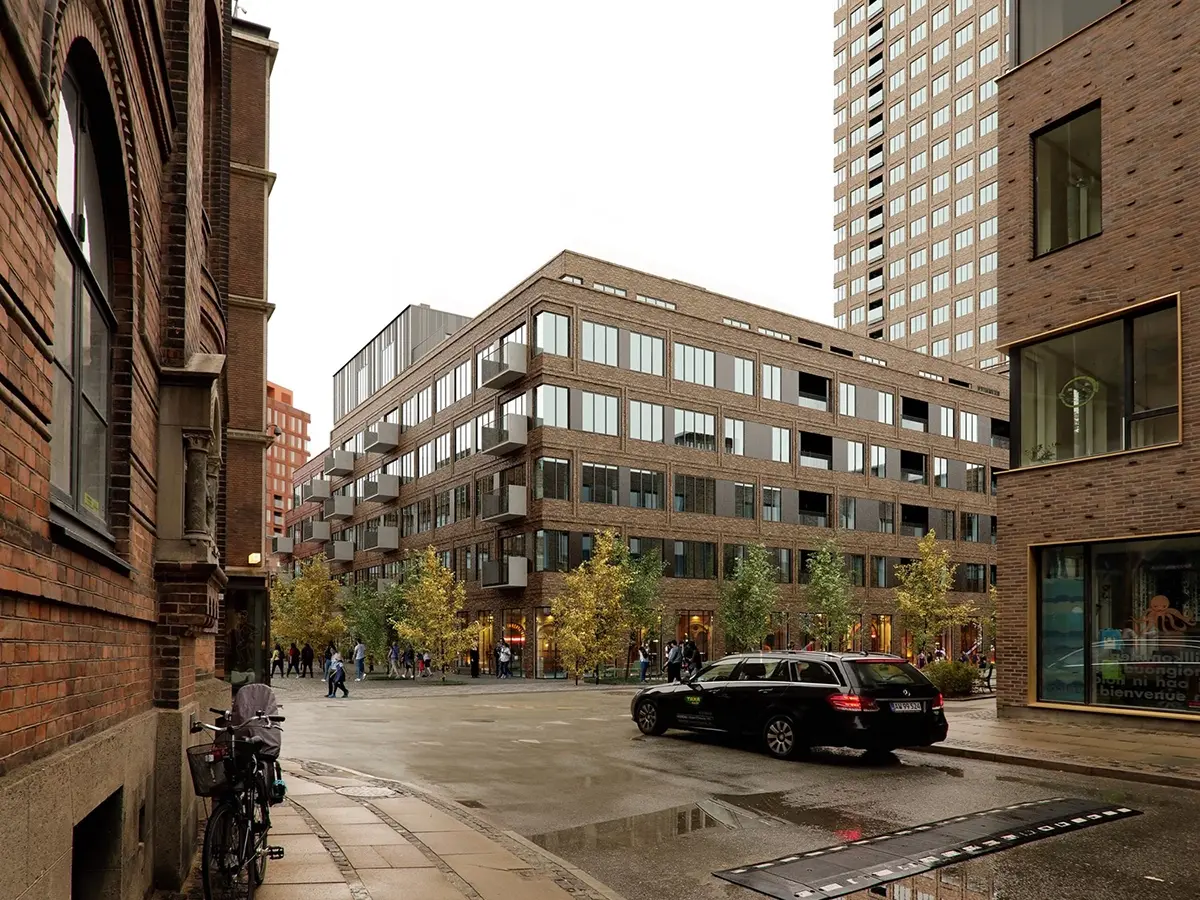
In modern construction processes, there has been a significant shift in documentation requirements for areas such as fire safety inspection and commissioning. On a construction project in Carlsberg Byen, this has changed the entire understanding of what "finished construction" means – both for the client and the contractors.
Previously,progress was recorded manually: someone walked through the building when the contractor said "I am done." A couple of signatures on a piece of paper, and the client received the keys. But complex installations and increasing documentation requirements make this considerably more difficult today.
Nina Fogh-Andersen is a site manager at Arpe Kjeldsholm and worked on a construction project in Carlsberg Byen. She was one of the people responsible for ensuring that the new and more demanding documentation requirements were met. Requirements that mean a construction project essentially needs to be finished six months before the actual handover date, so that all tests, commissioning procedures, and third-party inspections can be completed in time to obtain an occupancy permit.
Nina has implemented a new process for her planning, and when she pushes to get the construction project finished well ahead of schedule, it is not always well received.
"It is often difficult for both the client and the subcontractors to understand and accept. The subcontractors can wonder why they need to be finished so long before the actual handover date. And the client can wonder why the building cannot be occupied when it is, in fact, physically complete."
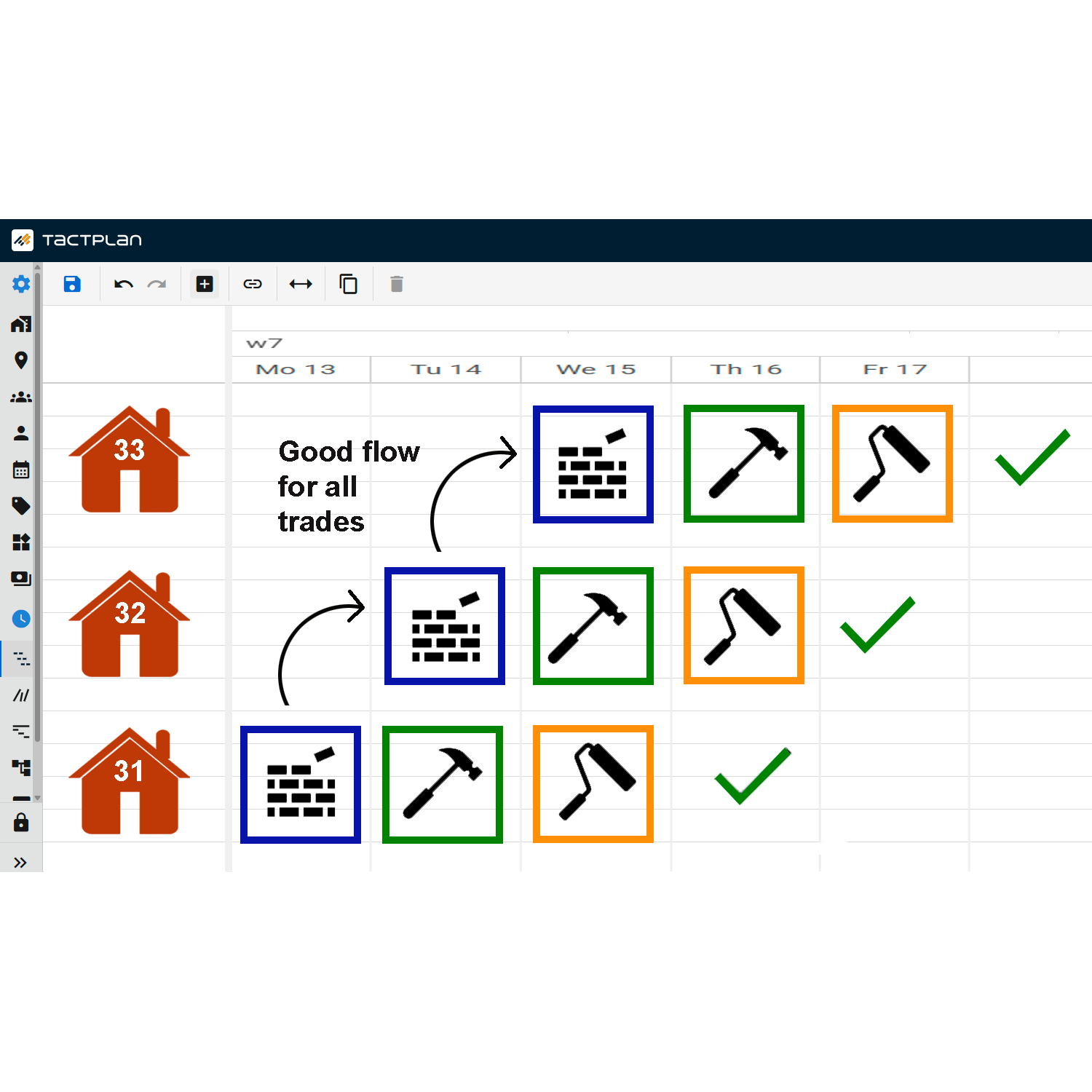
For this reason, Nina has begun – as something new – to integrate the activities that support documentation related to fire safety and commissioning directly into her main schedule. Previously she maintained a separate "technical schedule" that handled tests and similar tasks after construction was complete, but because the level of documentation is now so comprehensive, and because there is also a clear optimisation opportunity in merging the two schedules, that is precisely what she does. And it gives her a much better overview, which ultimately benefits the client.

But mergingt wo schedules also means that the schedules become increasingly complex. The only way Nina can keep track of locations, activities, and time is through location-based scheduling.
Nina explains:
"A carpenter might ask, for example, whether he can wait a week before fitting the door leaves in the stairwell. Previously, I might have said yes. But now, with the full overview in place, I can see that measurements in the stairwell are already planned for tomorrow, and the door leaves, door closers, and sealants all need to be in place by then. So this time I have to say no. If even a single door leaf is missing, the test cannot be carried out. That often means that one subcontractor's minor delay can affect the entire commissioning process.
The new documentation requirements demand tighter control. But in return, I can guarantee the client that the new documentation requirements will not affect the move-in date. Previously, tests and documentation could delay occupancy even when the building was physically complete. And if the documentation is not in order today, the client is fully entitled to withhold payment. They are carrying a risk."

In Carlsberg Byen, Nina and her team have therefore introduced an entirely new way of recording progress and status. It is Nina alone who carries out the status registration once a week. She carries forward the location breakdown from her schedule and uses digital floor plans with colour coding for each trade in her follow-up. In addition, all activities are marked with a colour code. Green: activity completed on time. Yellow: activity in progress but delayed. Red: activity not started and delayed.
She does around once a week to register status. That registration forms the basis for the construction meetings.
As something new, she has also now entered the fire safety inspection plan into the schedule. One example might be that the carpenter needs to carry out an inspection and document insulation in walls in accordance with fire safety requirements – and this must naturally be done before the walls are closed. The carpenter must upload fire safety inspections on the same basis as standard quality assurance documentation, but the fire safety inspection plan must ultimately be submitted as a complete package to a certified fire safety consultant. It is therefore critically important that all inspections are accounted for, as this is a prerequisite for obtaining an occupancy permit. By entering the inspections into the schedule and linking them to the execution activities, it provides an overview of whether the project is on track, since progress can be monitored in exactly the same way as for the physical work itself.
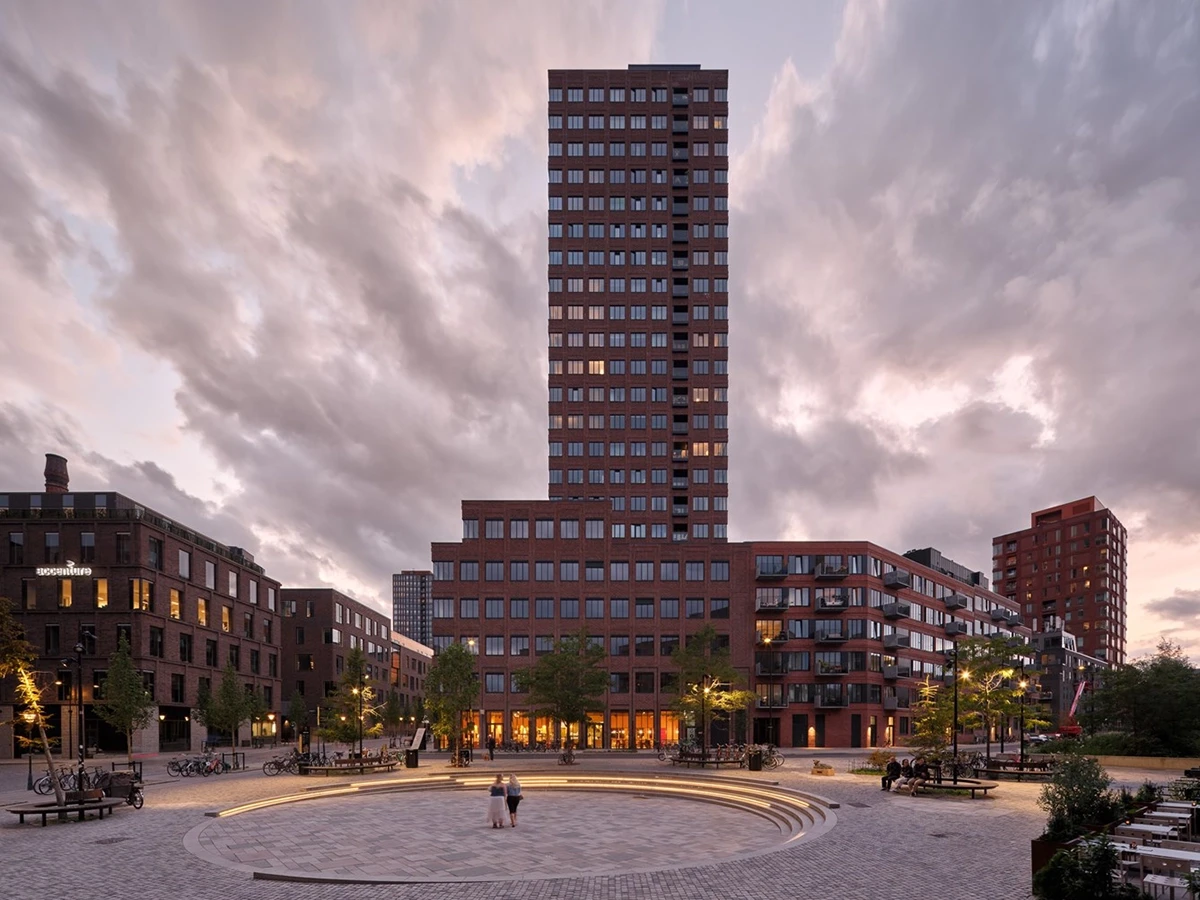
The case from Carlsberg Byen, which Arpe Kjeldsholm delivered on time, demonstrated that the growing documentation requirements can not simply be handled as an add-on to the existing process. They require a fundamental shift in the way constructionis planned, monitored, and completed. The construction phase, technical installation, and documentation must be considered together from the outset.
This requires:
- That all parties understand that "finished construction" is no longer the same as the hand over date
- A temporal integration and coordination between the construction phase, commissioning, and documentation
- That activities which are prerequisites for tests are created and managed as independent activities (for example, that door leaves and sealants in the stairwell must be fitted before measurements can be carried out)
- The use of location-based scheduling, so that activities, time, and locations are connected
- That concrete documentation activities are created in the schedule as prerequisites for occupancy – for example, fire safety inspections that must be submitted to a certified fire safety consultant
- Ongoing and systematic progress registration that provides a shared, up-to-date pictureof progress and risk
And above all, it requires that all parties – from the client to the last subcontractor – understand why activities must be completed in the correct sequence and at the correct time.