Running a successful construction project requires more than just skilled workers and quality materials. It demands exceptional construction site management. Whether you're overseeing a small renovation or managing a massive infrastructure project, effective site management determines whether your project finishes on time, stays within budget, and maintains the highest safety standards.
Poor site management leads to costly delays, safety incidents, and frustrated teams. Conversely, well-managed construction sites operate like clockwork, with each trade working efficiently in designated areas while maintaining clear communication channels. This comprehensive guide reveals proven strategies that transform chaotic job sites into models of efficiency and safety.
What is Construction Site Management?
Construction site management encompasses the coordination, organization, and oversight of all activities occurring at a construction location. It involves managing human resources, equipment, materials, schedules, and safety protocols to ensure smooth project execution from groundbreaking to final inspection.
If you’ve been in the industry for several years, you know all this. You can jump to the next section. If not, read on, there are a few definitions and shared elements that might be useful for you to learn about.
Definition
Construction site management is the systematic approach to organizing and controlling all on-site construction activities, ensuring optimal resource utilization while maintaining safety standards and project timelines.
Effective site management bridges the gap between project planning and execution. While project managers focus on high-level coordination and client relationships, site managers handle the day-to-day realities of construction work. This includes coordinating trade sequences, managing material deliveries, ensuring safety compliance, and maintaining quality standards throughout the project lifecycle.
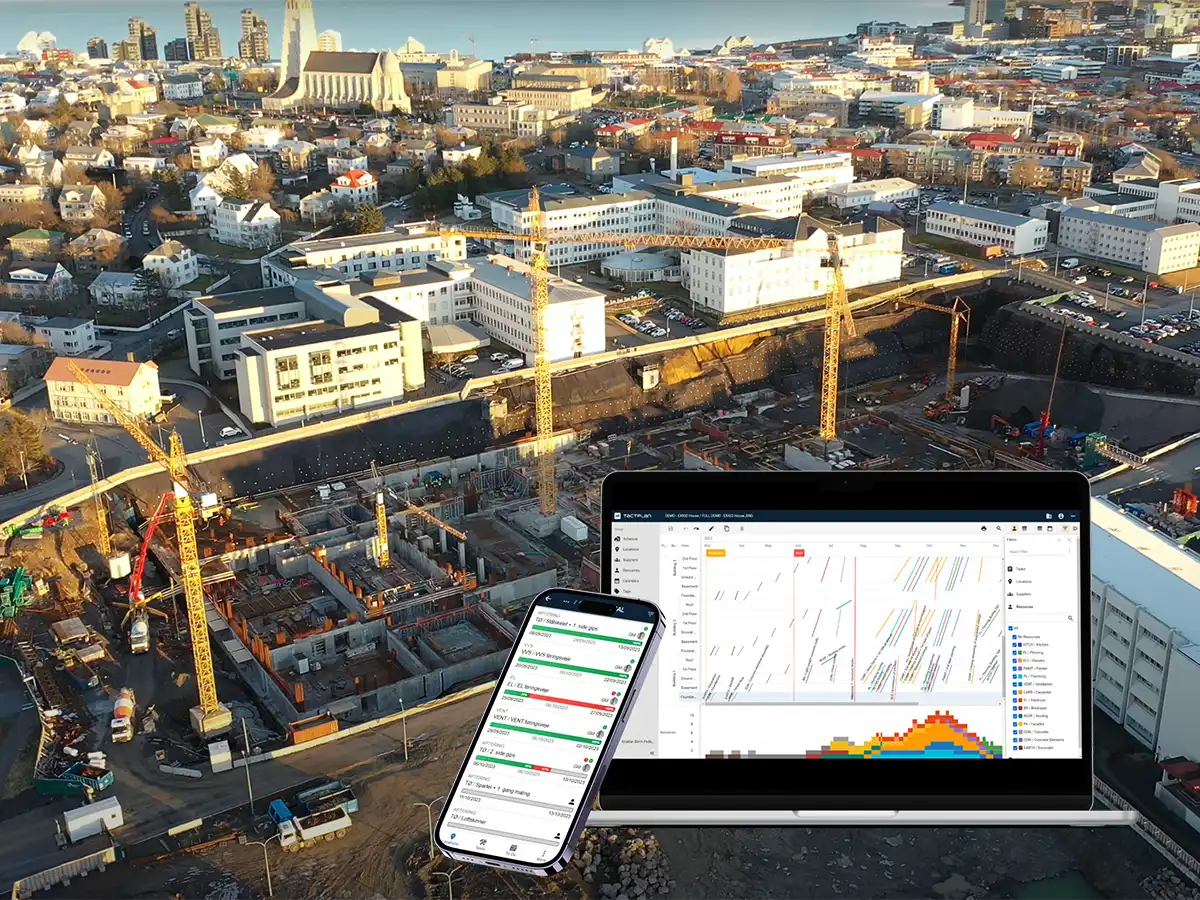
The discipline has evolved significantly with technological advances. Modern construction site management leverages digital tools for real-time progress tracking, mobile communication systems, and location-based scheduling that visualizes where and when work happens across different site areas.
Understanding different project types is crucial for effective site management. Hospital construction requires different management approaches than residential developments, while infrastructure projects present distinct coordination challenges. However, all successful projects share common elements: systematic planning, clear communication, and proactive problem-solving.
Why Effective Site Management is Critical for Construction Projects
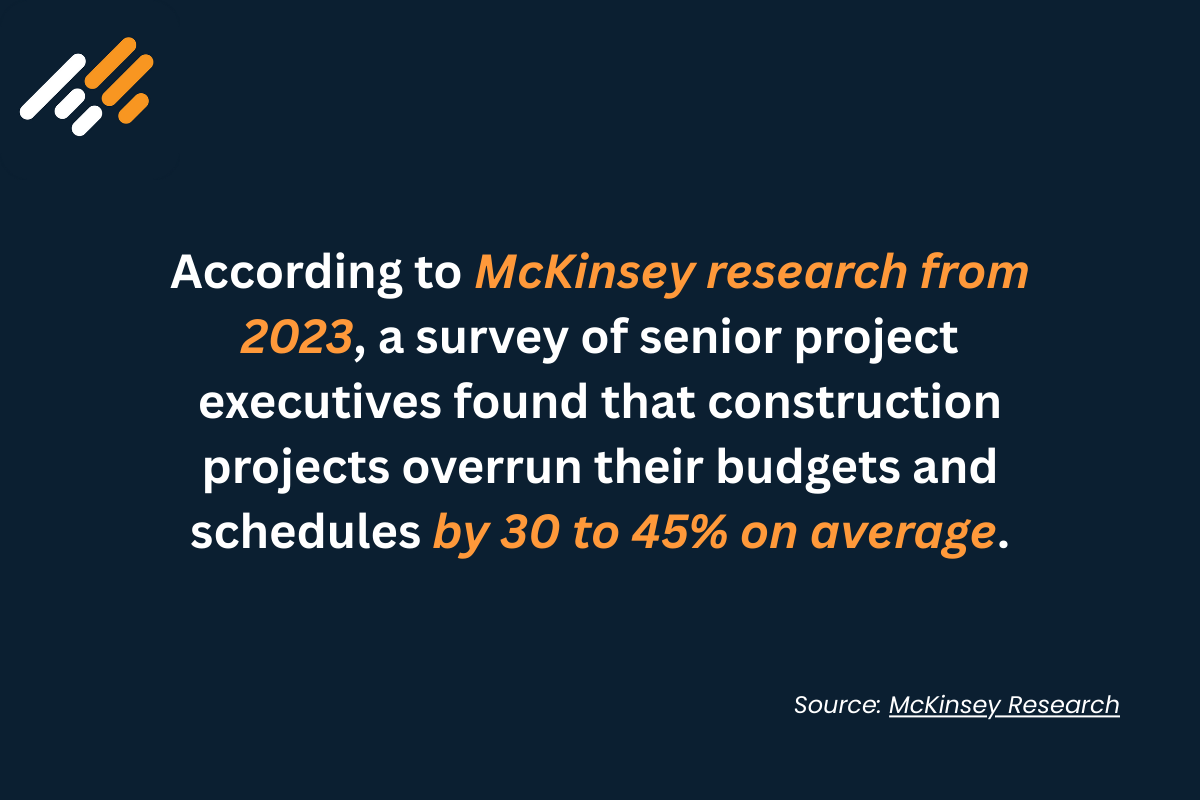
According to McKinsey research from 2023, a survey of senior project executives found that construction projects overrun their budgets and schedules by 30 to 45% on average. For mega projects specifically, McKinsey reports that 98% suffer cost overruns of more than 30%, and 77% are at least 40% late. Effective site management directly addresses these industry-wide challenges by creating predictable workflows and identifying potential delays before they escalate.
Timely Project Completion
Proper site management ensures that each phase of construction flows seamlessly into the next. When site managers implement location-based planning methods, they can coordinate multiple trades working simultaneously without conflicts. This spatial-temporal coordination prevents the cascading delays that plague projects traditionally managed in excel or Gantt charts.
Modern construction projects often involve dozens of specialized trades working in overlapping sequences. Without proper coordination, these trades can interfere with each other, causing delays that ripple throughout the project schedule. Effective site management creates clear workflows that maximize productivity while minimizing conflicts.
The complexity of modern construction demands sophisticated coordination approaches. Traditional scheduling methods that focus only on time relationships often fail to account for spatial constraints and resource conflicts. Site managers who understand these interdependencies can create more realistic schedules and prevent common coordination failures.
Simon Grønhøj Jensen, Construction Manager at Eurodan-huse, experienced this firsthand on a 31-home project at Høgedalsparken:
"I had complete control over which activities started where and when. After a month, Kasper and I could present my schedule to my technical director. He'd been calling the Flowline schedules 'spaghetti' until that meeting—he didn't understand the method yet. But when I could tell him that I was pretty sure I could deliver the houses well before schedule, the spaghetti suddenly made a lot of sense. Today, he loves spaghetti."
The project delivered Phase 1 one month early and Phase 2 two months early—a testament to the power of systematic coordination.
Cost Control
Resource mismanagement ranks among the top causes of construction budget overruns. Effective site management prevents costly scenarios like idle equipment, material waste, and crew downtime. By implementing systematic approaches to resource allocation and progress tracking, well-managed sites typically achieve 10-15% cost savings compared to poorly managed counterparts.
Helle Kvartborg, Team Leader for Scheduling and Portfolio Management at Birch Properties, explains the financial impact:
"This also means we don't get as many extra invoices as before. He doesn't need to build in a buffer. They don't need to think 'buffers' into their collaboration - they know they can count on us, and we know we can count on them."
She adds that catching problems early makes a dramatic difference:
"Looking at the complete picture, where it takes longer to make drainage, etc. due to difficult access conditions, and construction site costs must be increased due to schedule delay, it can total up to 1.5 million."
Cost control extends beyond simple budget tracking to encompass productivity optimization and waste reduction. Site managers who implement lean construction principles can significantly reduce project costs by eliminating non-value-added activities and improving workflow efficiency.
Material waste represents a major cost category that effective site management can dramatically reduce. According to the U.S. Environmental Protection Agency, construction and demolition debris totaled over 600 million tons in the U.S. in 2018 alone, more than twice the volume of municipal solid waste. Much of this waste stems from poor planning, over-ordering, and inefficient on-site logistics.
Quality Control
Construction quality depends heavily on proper sequencing and coordination between trades. Site management ensures that each task is completed to specification before dependent work begins. This prevents costly rework and quality defects that often emerge when trades work out of sequence or without proper oversight.
Quality management involves implementing systematic inspection procedures, maintaining detailed documentation, and ensuring that all work meets specified standards before subsequent trades begin their activities. This proactive approach prevents quality issues from becoming embedded in the structure where they're expensive to correct.
Risk Mitigation
Beyond quality concerns, construction sites present numerous risks—from safety hazards to weather delays to schedule disruptions. Effective site management involves continuous risk assessment and proactive mitigation strategies. By identifying potential issues early, site managers can implement corrective measures while they're still manageable and inexpensive to address.
Risk management requires understanding both project-specific risks and industry-wide challenges. Weather delays, material shortages, equipment failures, and labor disputes can all impact project success. Effective site managers develop contingency plans for likely risks and maintain flexibility to respond to unexpected challenges.
When projects achieve timely completion within budget while maintaining quality and safety standards, it's rarely due to luck—it's the result of systematic management practices that address quality control, risk mitigation, and all the critical areas of site coordination.
Key Components of Construction Site Management
Successful construction site management relies on three fundamental components working in harmony. Each component addresses specific operational challenges while supporting the overall project objectives discussed in the previous section.
1. Site Preparation and Layout
Strategic site organization forms the foundation of efficient construction management. This involves planning optimal locations for material storage, equipment positioning, and workspace allocation to maximize workflow efficiency while minimizing conflicts between trades.
Successful site layout considers both current phase requirements and future construction needs. For example, crane positioning must account for reach requirements across multiple phases, while material laydown areas should facilitate easy access without interfering with ongoing work. Digital site planning tools enable managers to visualize these spatial relationships before work begins, preventing costly repositioning later.
The most effective site layouts incorporate principles from lean construction, minimizing material handling distances and creating clear pathways for worker movement. This reduces wasted motion and improves overall productivity.
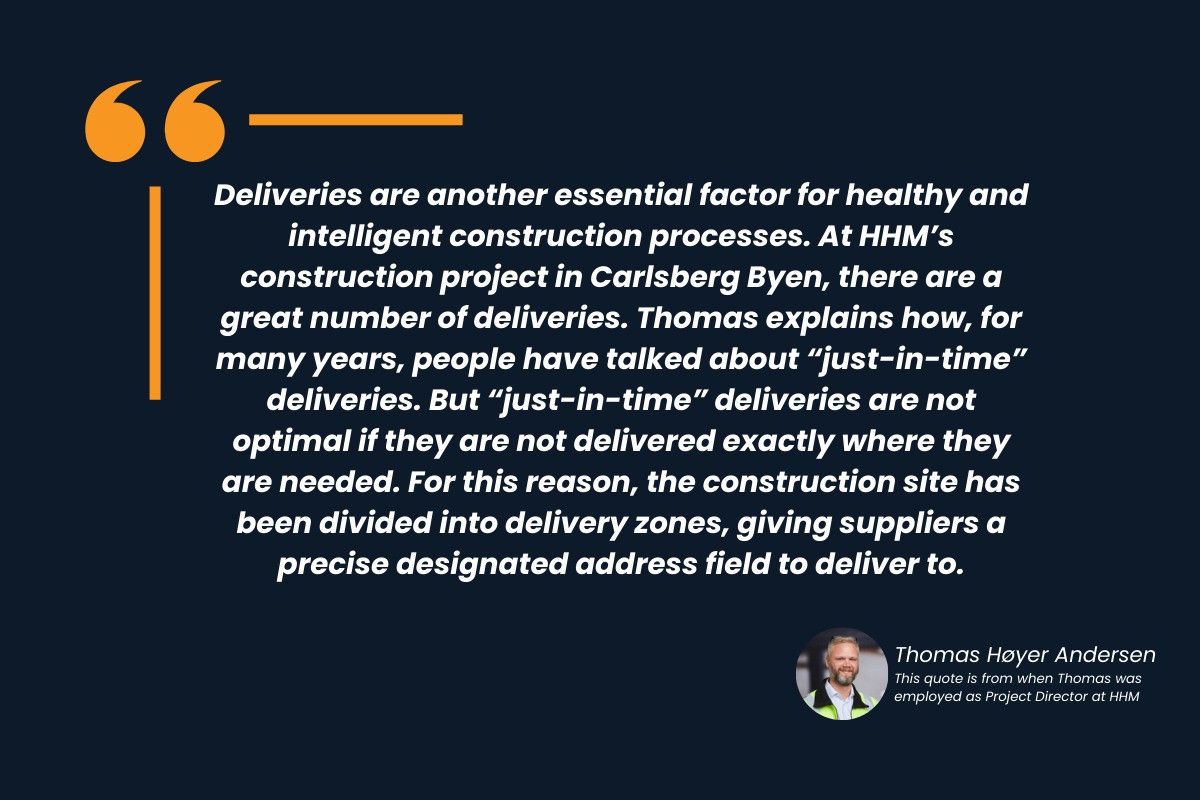
Site logistics planning also involves coordinating delivery schedules to prevent congestion and ensure that materials arrive when needed. This requires close coordination with suppliers and subcontractors to synchronize delivery timing with construction schedules.
2. Resource Management
Managing tools, equipment, and materials requires sophisticated coordination to prevent shortages that cause delays and surpluses that tie up capital. Modern resource management involves real-time tracking systems that monitor inventory levels, delivery schedules, and utilization rates.
Effective resource management begins with accurate quantity takeoffs and realistic consumption forecasts. Site managers must coordinate with procurement teams to ensure materials arrive just-in-time — early enough to prevent work delays but not so early that they create storage problems or deterioration risks.
Equipment management involves optimizing utilization rates while ensuring preventive maintenance schedules don't conflict with critical path activities. The most successful sites maintain detailed equipment logs that track performance metrics and identify optimization opportunities.
Labor resource management presents unique challenges because skilled construction workers often work for multiple contractors and may not be available when initially planned. Effective site managers maintain relationships with reliable labor sources and develop backup plans for critical activities.
3. Scheduling and Time Management
Creating and maintaining realistic project timelines requires more than simple Gantt charts. Modern construction scheduling demands location-based planning that considers spatial constraints and trade interdependencies.
Traditional scheduling methods often fail because they ignore the reality that construction work happens in specific locations with finite space. When multiple trades need to work in the same area, conflicts are inevitable unless spatial relationships are explicitly planned. Location-based scheduling tools address this challenge by visualizing both temporal and spatial project dimensions.
Effective time management also requires frequent schedule updates based on actual progress. Rather than hoping planned schedules will hold, successful site managers implement weekly look-ahead planning sessions that adjust upcoming work based on current realities.
Takt planning represents an advanced scheduling approach that creates predictable work rhythms across construction zones. By establishing consistent cycle times for repetitive activities, takt planning enables better resource utilization and more predictable project delivery. This methodology bridges the gap between site preparation, resource management, and effective scheduling to create comprehensive project coordination.
Nina Fogh-Andersen, Project Manager at Arpe & Kjeldsholm, discovered the power of location-based scheduling on the Wakeup Copenhagen hotel project:
"At one point, a masonry foreman came to me in the construction office. He wanted to have an additional half day for each bathroom. It sounded reasonable, so I entered it into the schedule immediately to see the impact of the change. However, it turned out that it would shift the overall schedule by 5 weeks. The consequence would be impossible to comprehend and illustrate with Gantt. The foreman could see that it didn't make sense, so he left and brought in more people to the site instead."
She adds:
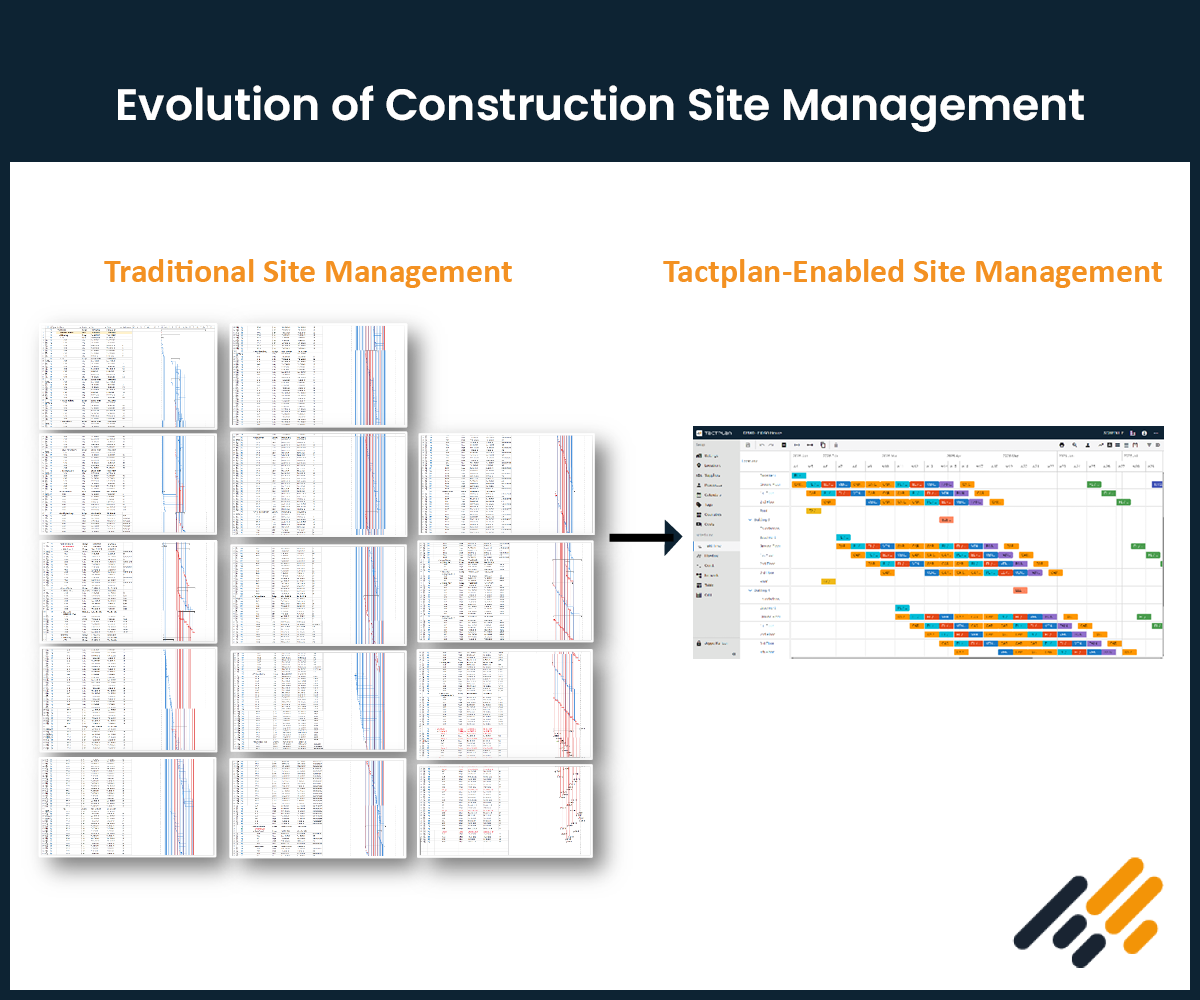
"With flow lines (location-based scheduling), one can constantly see the impact of a change or if something shifts. The schedule on the project filled 40 A3 pages in Gantt. With flowlines, the schedule filled one A3 page."
Construction Safety Management: Ensuring a Safe Work Environment
While the previous sections focused on efficiency and coordination, safety management forms the non-negotiable foundation upon which all other site management activities must be built. Without proper safety protocols, even the most efficient sites become liability risks that threaten project success.
Importance of Safety on the Construction Site
Construction Safety Management represents the most critical aspect of site management, as worker safety directly impacts project success, company reputation, and legal compliance. The Bureau of Labor Statistics reports that construction accounts for the highest number of workplace fatalities annually, making robust safety management essential for every project.
Beyond moral imperatives, safety incidents create significant project disruptions. A serious accident can halt work for days or weeks while investigations proceed, leading to schedule delays and cost overruns. Additionally, poor safety records impact a contractor's ability to bid on future projects and affect insurance costs.
Modern safety management involves proactive hazard identification, comprehensive training programs, and continuous monitoring of safety compliance. Digital tools now enable real-time safety reporting and trend analysis, helping site managers identify patterns before incidents occur.
Safety culture development requires consistent leadership commitment and worker engagement. The most successful projects involve workers in safety planning and encourage reporting of near-miss incidents that can prevent future accidents.
Safety Regulations and Standards
Construction sites must comply with safety regulations such as OSHA's 29 CFR 1926, which covers fall protection, electrical safety, excavation procedures, and personal protective equipment. In 2025, OSHA further tightened these requirements, including stricter PPE fit standards and enhanced fall prevention measures. Where projects fall outside U.S. jurisdiction, equivalent national standards apply.
Effective safety management goes beyond minimum compliance by implementing company-specific safety protocols tailored to project-specific risks. According to the Safety Management in the Construction Industry 2023 SmartMarket Report by CPWR and Dodge Construction Network, contractors who consistently engaged in proactive safety activities — including regular training sessions and pre-task planning — saw an 84% reduction in recordable injury rates and a 60% improvement in productivity. Simply meeting the minimum regulatory bar leaves significant performance gains on the table.
The most successful projects integrate safety considerations into daily planning activities. Rather than treating safety as a separate concern, effective site managers incorporate safety protocols into work sequencing and resource allocation decisions.
With safety protocols firmly established as the foundation, we can now build upon this with operational best practices that elevate site management from adequate to exceptional.
Best Practices in Site Management for Construction Projects
Building on the foundational elements of site organization, resource management, scheduling, and safety protocols, successful site managers implement specific best practices that integrate these components into cohesive management systems.
Communication and Coordination Excellence
Successful construction site management relies heavily on clear, timely communication between all project stakeholders. This includes daily briefings with trade foremen, weekly coordination meetings with subcontractors, and regular progress updates to project management teams.
Modern projects benefit from mobile communication platforms that enable instant updates from field personnel. These systems provide mobile-first progress tracking that connects field teams directly to planning systems. This real-time connectivity ensures that schedule adjustments can be made immediately when field conditions change.
Communication effectiveness depends on choosing appropriate channels for different types of information. Urgent safety issues require immediate verbal communication followed by written documentation, while routine progress updates can use standard reporting formats.
Proactive Problem-Solving
The most effective site managers don't wait for problems to develop — they actively seek potential issues and address them proactively. This involves regular site walks, trend analysis of performance metrics, and maintaining close relationships with trade supervisors who often identify problems first.
Look-Ahead Planning:
Successful projects implement structured look-ahead planning processes that identify potential conflicts and resource constraints weeks before they impact work. This forward-thinking approach enables teams to develop solutions while multiple options remain available
Technology Integration:
Modern construction management platforms provide predictive analytics that help identify schedule risks and resource conflicts before they occur. By analyzing historical performance data and current progress trends, these systems can flag potential problems early in their development.
Problem-solving effectiveness improves when site managers maintain detailed databases of previous solutions and lessons learned. This institutional knowledge helps teams respond more quickly to recurring challenges.
Continuous Improvement Culture
The most successful construction sites foster cultures of continuous improvement where team members actively seek ways to enhance efficiency and safety. This involves regular lessons-learned sessions, benchmarking against industry standards, and implementing feedback from field personnel.
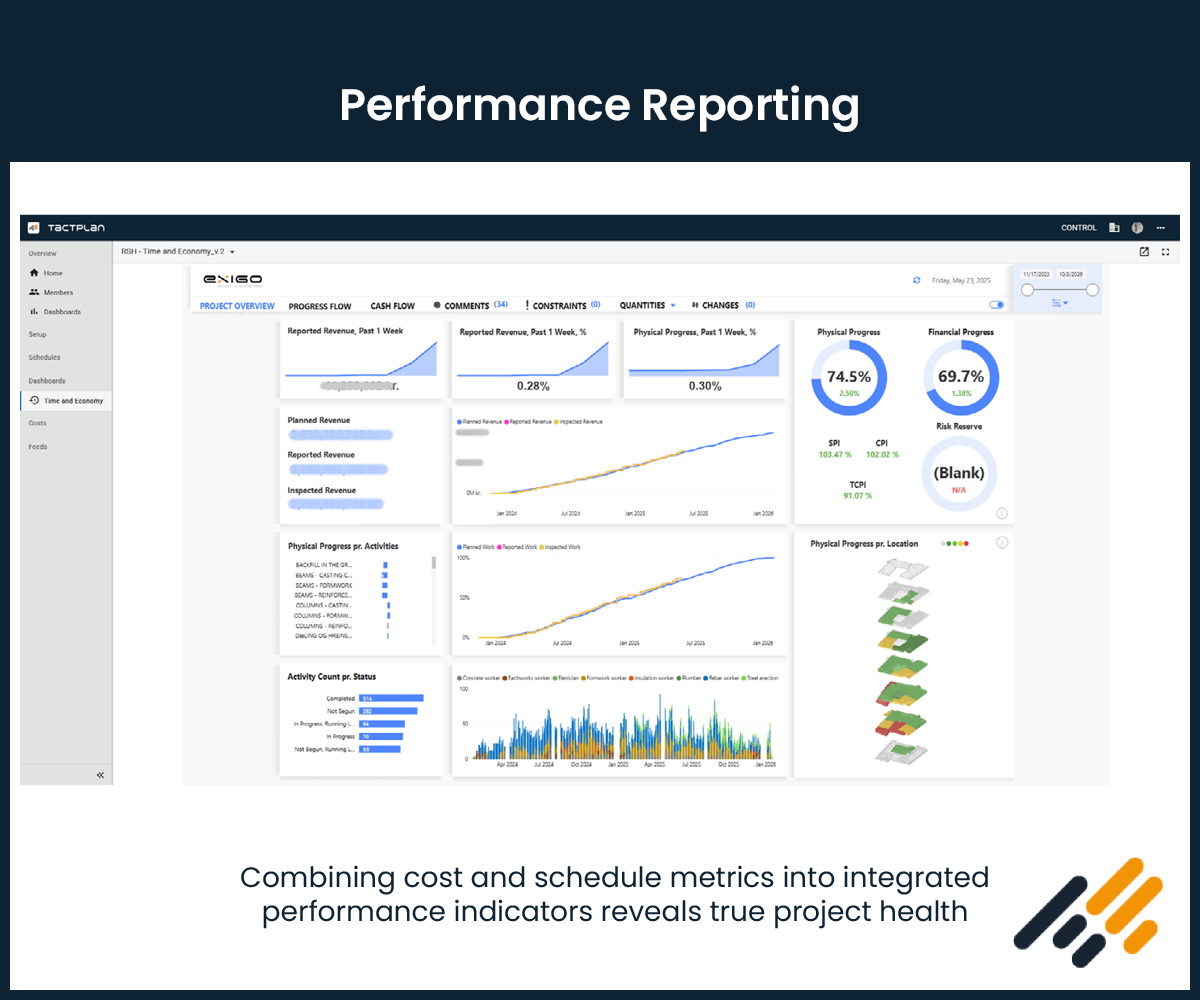
Tactplan Control supports this process by capturing real-time constraints and comments directly from the field, creating a structured feedback loop where issues are documented by location and task. Teams can benchmark performance through visual progress tracking and earned value analysis, turning daily observations into actionable insights for continuous improvement.
Performance Metrics: Tracking key performance indicators enables site managers to identify trends and improvement opportunities. Important metrics include productivity rates, safety incident frequencies, quality defect rates, and schedule adherence percentages.
Team Engagement: Engaging field personnel in improvement initiatives often yields the most practical solutions. Workers who perform tasks daily often have insights into efficiency improvements that may not be apparent to management personnel.
Theis Ballegaard, Project Manager, saw organizational impact:
"When everyone is continuously updated on actual progress through the app, everyone also arrives at the construction meetings fully prepared and fully informed. No one is surprised about how far we’ve come. And that automatic response you often hear when delays occur — “No problem that we’re behind, we’ll catch up anyway” — I haven’t heard that in a long time. We can use the construction meetings to plan ahead instead of reacting to delays behind us. In three weeks, the carpenter needs to be in that area. What tools and materials will he need at that location? Everyone is well prepared."
Continuous improvement requires systematic approaches to identifying opportunities, implementing changes, and measuring results. The most successful programs establish regular review cycles and provide recognition for improvement suggestions.
How to Overcome Common Challenges in Construction Site Management
Even with strong foundational practices and systematic approaches in place, construction site managers inevitably face recurring challenges that test their systems and adaptability. Recognizing these common issues and developing proactive solutions separates good site managers from exceptional ones.
Worker Productivity and Morale
Maintaining high productivity and morale requires addressing both physical and psychological factors that influence worker performance. Physical factors include providing adequate workspace, proper tools, and comfortable break facilities. Psychological factors involve clear communication, fair treatment, and recognition of good performance.
Worker Productivity and Morale:
Strategies for maintaining high levels include implementing fair scheduling practices that provide predictable work hours, ensuring adequate workspace allocation to prevent overcrowding, and maintaining clear communication channels between management and field personnel. Research demonstrates the critical importance of management accessibility to on-site workers: "It was quickly realized that, especially during the morning start-up, it had a large effect on the productivity when site managers were accessible out on the site" (Johansen et al., 2021, p. 843). This finding underscores that visible site management and immediate access to decision-makers directly impacts daily productivity levels.
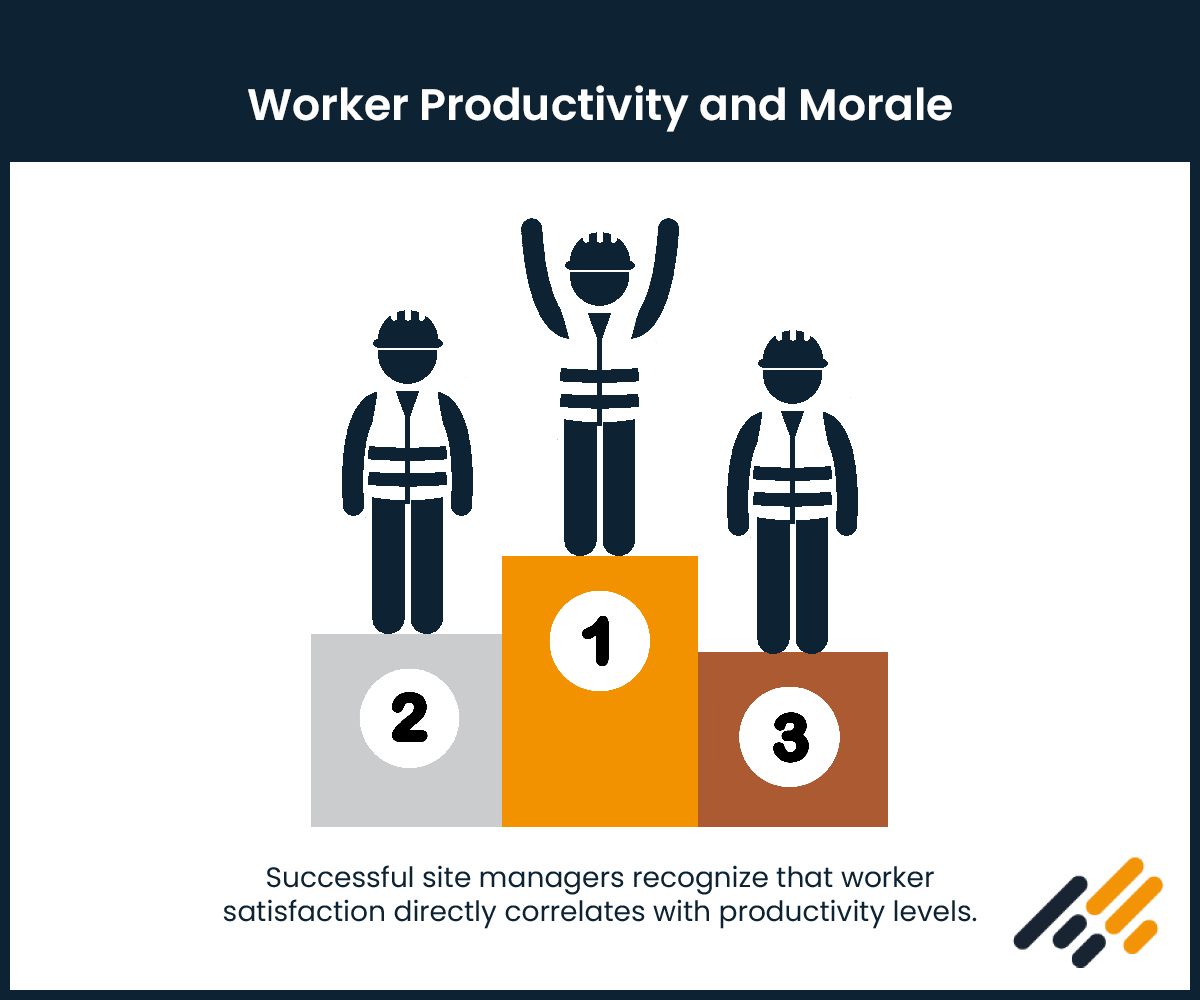
Successful site managers recognize that worker satisfaction directly correlates with productivity levels. This involves addressing worker concerns promptly, providing opportunities for skill development, and maintaining safe working conditions that demonstrate management's commitment to worker welfare. Studies confirm that improved coordination and communication reduce time spent clarifying issues, with one renovation project showing "talking, which more than halved, showing that planning and coordination improved, leaving fewer issues to be clarified" (Johansen et al., 2021, p. 846).
Worker retention becomes increasingly important as skilled labor shortages affect the construction industry. Sites that maintain positive working environments and provide growth opportunities experience lower turnover rates and better productivity.
Coordination Between Contractors
Managing multiple contractors and subcontractors requires sophisticated coordination systems that prevent conflicts while maximizing efficiency. This involves establishing clear communication protocols, implementing standardized safety procedures, and using shared scheduling systems that provide visibility into all trade activities.
Location-based scheduling becomes particularly valuable when coordinating multiple contractors because it explicitly shows spatial relationships between different work activities. This prevents the common problem of multiple trades trying to work in the same area simultaneously.
Successful multi-contractor coordination also requires fair and transparent policies for shared resources, workspace allocation, and schedule adjustments. Clear contracts and regular coordination meetings help prevent disputes before they escalate.
Subcontractor management involves more than just contract administration. Effective site managers build partnerships with reliable subcontractors and provide the support they need to perform effectively.
Theis Ballegaard, Project Manager, uses impact visualization to improve coordination:
"If the carpenter is two days late, I can show him the consequence of his delay. It may well be that his work takes longer than expected, and it may be quite real, but the important exercise here is to show him the consequences. Then the carpenter may have to play one more game in order to reach the deadline and not postpone the end date. And when I show the carpenter the consequence of the cutting edge, he can understand it. It is easy to visualize the consequence for him with flowlines."
Software for Effective Construction Site Management
Digital transformation has revolutionized construction site management by providing real-time visibility into project progress, resource utilization, and potential problems. Modern construction management platforms integrate scheduling, progress tracking, and communication functions into unified systems that support better decision-making.
Tactplan's Comprehensive Solution
Tactplan addresses site management challenges through two integrated platforms designed specifically for construction professionals:
Tactplan Schedule revolutionizes project planning by implementing location-based scheduling that shows both when and where work happens. Unlike traditional Gantt chart systems that only display temporal relationships, Tactplan Schedule visualizes spatial constraints and trade interactions across the construction site. This approach enables site managers to identify potential conflicts before they occur and optimize work sequences for maximum efficiency.
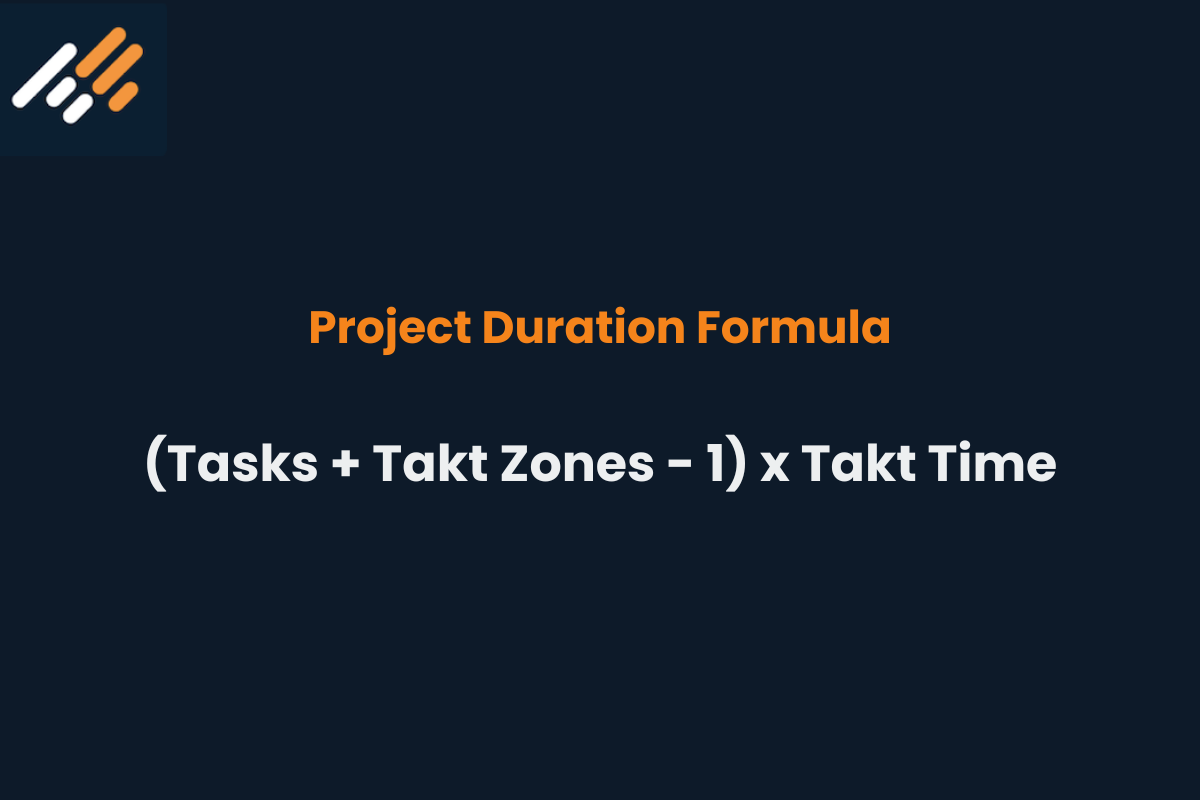
The platform incorporates takt planning capabilities that create predictable work rhythms across construction zones. Using the formula Project Duration = (Tasks + Takt Zones - 1) x Takt Time, site managers can optimize resource allocation and minimize project duration. For example, a project with 20 units and 10 tasks per unit can achieve significant time savings by optimizing takt time through either increased resources or strategic zone division.
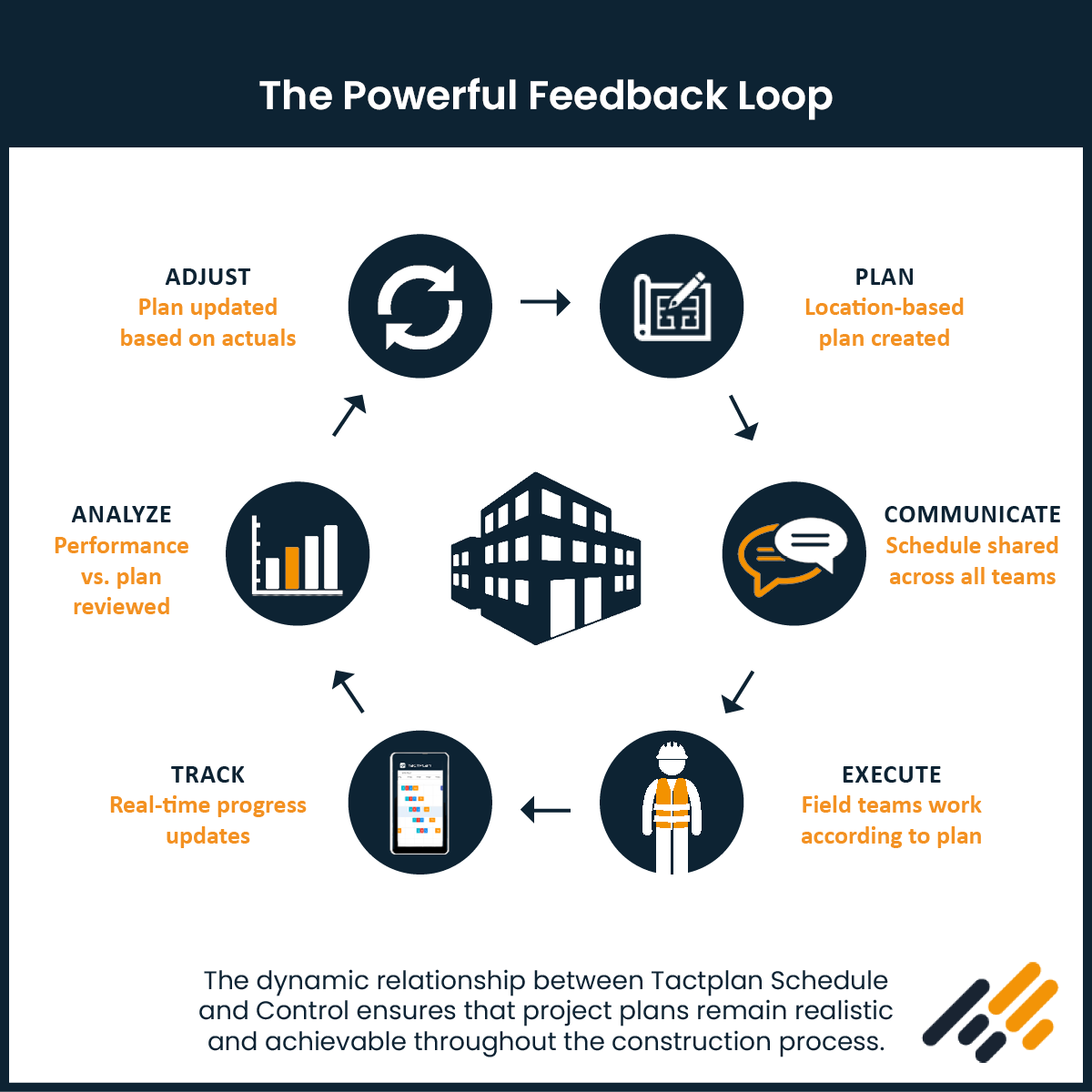
Tactplan Control provides mobile-first progress tracking that connects field teams directly to project schedules. Site supervisors can update progress, report issues, and upload photos in real-time, ensuring that project information remains current and accurate. This immediate connectivity enables faster response to changing conditions and better coordination between office and field personnel.
The integration between Schedule and Control creates a powerful feedback loop where actual progress informs schedule adjustments, while updated schedules guide future work planning. This dynamic relationship ensures that project plans remain realistic and achievable throughout the construction process.
Key Benefits of Digital Site Management
- Real-time progress visibility across all project locations
- Mobile access for field teams to update status and report issues
- Automated identification of schedule conflicts and resource constraints
- Integrated communication systems that keep all stakeholders informed
- Historical data collection that supports continuous improvement initiatives
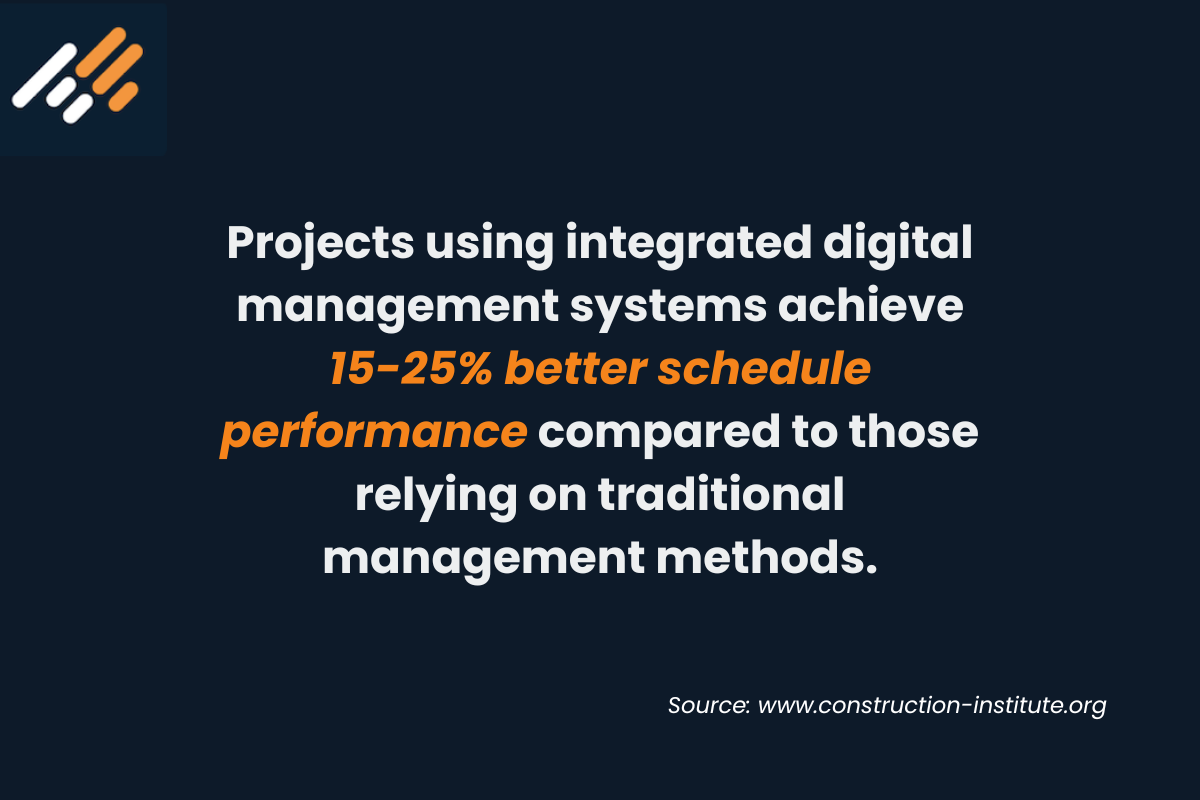
Research from the Construction Industry Institute shows that projects using integrated digital management systems achieve 15-25% better schedule performance compared to those relying on traditional management methods. This improvement stems from better information flow, faster decision-making, and more accurate progress tracking.
Sites using advanced management software also report significant improvements in safety performance, as digital systems enable better hazard tracking and incident reporting. The ability to analyze trends across multiple projects helps contractors identify systemic issues and implement preventive measures.
Implementation Success Factors
- Comprehensive training for all system users
- Clear protocols for data entry and updates
- Integration with existing company systems
- Regular review of system effectiveness and user feedback
- Continuous refinement of processes based on lessons learned
Companies implementing digital site management solutions typically see positive returns within the first project, as improved coordination and communication prevent costly delays and rework.
Technology adoption in construction requires careful change management to ensure user acceptance and system effectiveness. Successful implementations involve field personnel in system selection and provide adequate training to ensure comfortable usage.
Conclusion
Modern construction site management demands sophisticated tools that match the complexity of today's construction projects. By implementing proven strategies and leveraging advanced technology platforms, construction professionals can transform challenging job sites into models of efficiency, safety, and profitability.
Effective site management isn't just about controlling chaos — it's about creating predictable systems that enable teams to perform at their highest levels while maintaining safety standards and quality requirements. The investment in better site management practices pays dividends throughout the project lifecycle and establishes foundations for continued success on future projects.
The construction industry continues evolving toward more sophisticated management approaches that leverage data analytics, mobile technology, and advanced scheduling methodologies. Contractors who embrace these innovations position themselves for competitive advantages in an increasingly demanding market.
Ready to transform your construction site management? Book a demo or start a free trial and see firsthand how Tactplan Schedule and Control can streamline your operations and boost project success rates.