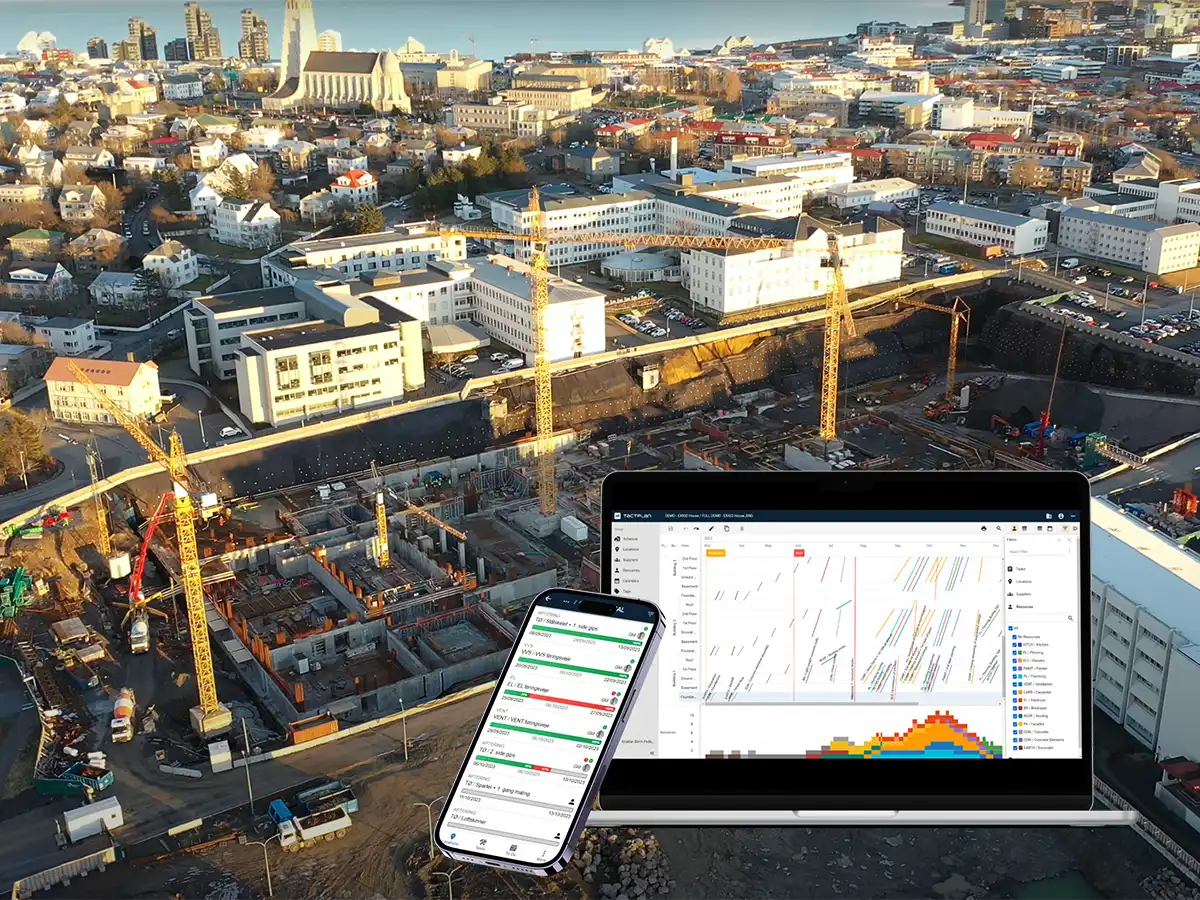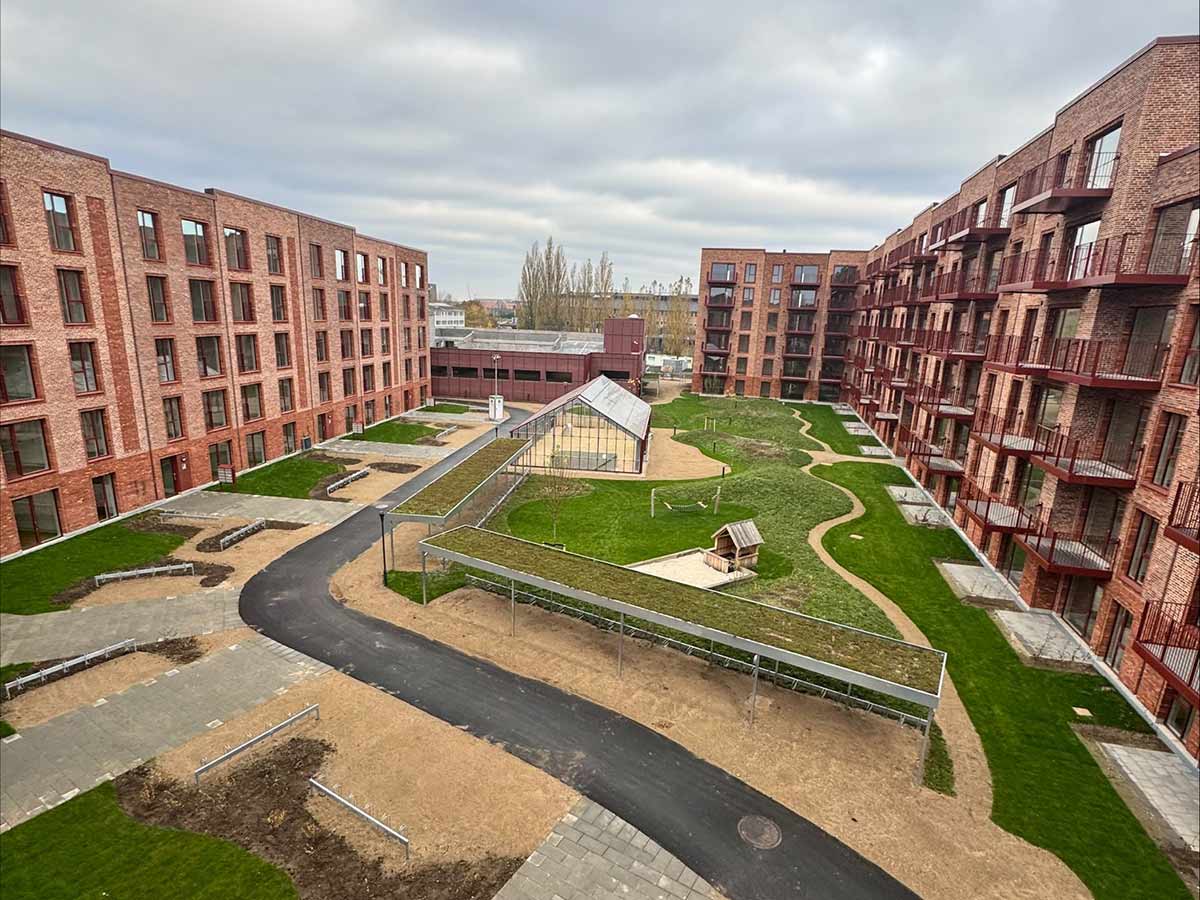
Location-based scheduling ensures that all trades have a good flow between their tasks – and that the construction site's zones are used optimally. This provides better overview, less waste, and often a shorter construction time. V8 Construction is a great example of what this can mean in practice – and of how a collaboration with Exigo can make the difference.
Kennet Kruse from V8 Construction has changed the way he creates schedules. With location-based scheduling and external support from Exigo, the administrative workload hasbeen significantly reduced, and residential construction projects are now completed ahead of schedule. This has happened without increasing the pace onsite – on the contrary, subcontractors experience a more stable and predictable flow.
The shorter construction time has also reduced the overall operating costs of the construction site.
The traditional approach to scheduling had become a growing challenge. Schedules were created in Excel and Gantt, and every delay triggered a series of administrative tasks.
Multiple documents needed to be updated and synchronized, yet despite this, Kennet didn't gain a better understanding of the consequences of those changes. Small delays in production could have knock-on effects that only became visible late in the process.
The result was that Kennet spent a disproportionate amount of time on scheduling – often in the form of fire-fighting and manual coordination.
"I spent a lot of time updating the schedules, but it was difficult to see through the consequences of changes along the way. When one activity shifted, it was unclear how it affected the subsequent activities and the overall schedule."
In 2022, V8 Construction began using location-based scheduling instead of Gantt planning. At the same time, the work of creating the schedules themselves was handed over to an external planner.
"We asked an external planner from Exigo to help us, and he's still helping us today. He converts the schedules from Gantt to location-based scheduling. I feed him the rules for sequence, capacity, crews, and locations. For example, the floor layer needs 0.85 days per unit."
This produced schedules where each trade had its own work area, and where work was planned so that subcontractors could move through the units without interruption. It became clear when tiles were being laid on the ground floor, when kitchens were being installed on the second floor, and how the flow moved through the building.
"That kind of overview is simply not possible in Gantt – no matter how experienced or skilled a planner you are."
The visual overview also made it immediately apparent when two trades were scheduled in the same location at the same time – and therefore where there was a risk of conflicts and delays.
Kennet chose to continue the collaboration with the external planner because the calculation turned out to be straightforward.
"Before,I spent far too long creating and maintaining schedules. I could easily spend 12–14 working days per project. Now I spend one day. My time is better spent finding new projects, securing good contracts with subcontractors and suppliers, supervising the site."
The scheduling work is therefore outsourced to the planner from Exigo at a cost equivalent to three working days per project.
"Kasper from Exigo is our external planner, and this is all he does. He's incredibly fast, and the money is well spent. With his help, projects can typically be delivered a month ahead of schedule."
According to Kennet, the results are not due to working faster, but to working in a more coordinated way.
Location-based scheduling creates a shared understanding across trades. Painters, floor layers ,and plumbers know where they need to be and when. This reduces waiting time, overlap, and miscommunication.
"The schedules give everyone involved a sense of predictability, and that strengthens collaboration with both subcontractors and clients. I've never delivered a project late – but now I can actually take pride in delivering early."

The savings are not an end in themselves, but a consequence of better overview and more predictable planning. When projects can typically be delivered around a month ahead of schedule, the overall operating costs of the construction site are reduced.
Kennet sums up the experience like this:
"When we can deliver around a month early, that translates into a direct saving on every project. The investment pays for itself many times over."